

Bombardier Global
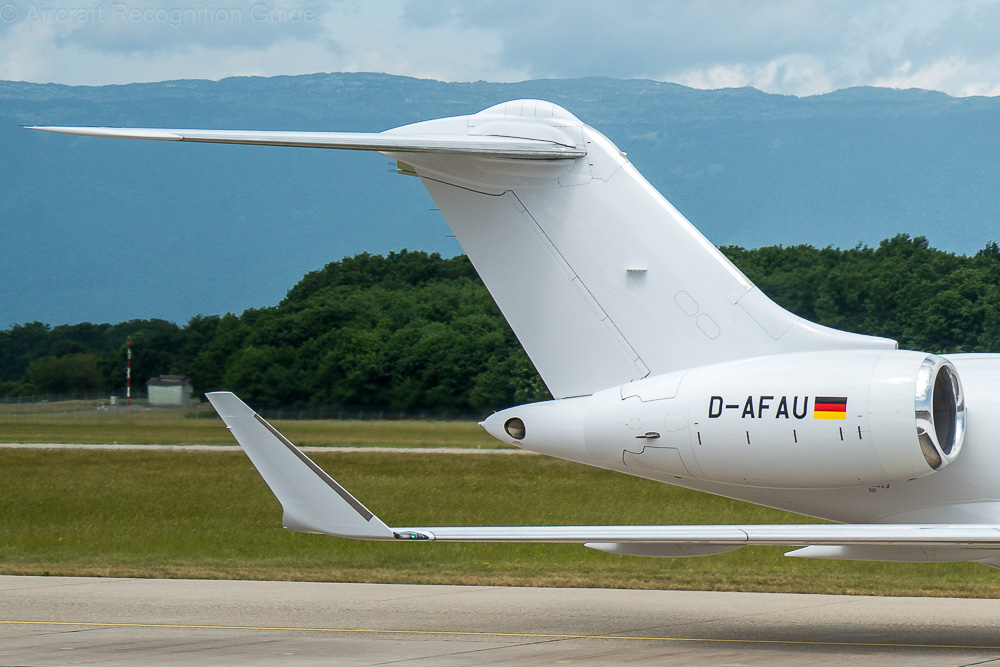
The large cabin business jets built by Bombardier are clearly a derivative of the Challenger series and Regional Jet series 100/200. This is especially visible when looking at the front of the fuselage as the cockpit windows and cabin windows are the same (at least for most versions). However, the Globals have a slightly different tail with no bullet fairing at the top, but still with an intake in the short dorsal fin. The tail cone is rounded and has an APU exhaust on the right. Finally, the engines have a single exhaust.

How to recognise the different versions of the Bombardier Global
To differentiate between the Global subtypes you have to look at
- the fuselage length
- the number of cabin windows
- the size of the cabin windows
- the top of the vertical stabiliser
- the angle of the winglets
Bombardier BD-700-1A10 Global Express, Global Express XRS & Global 6000/6500
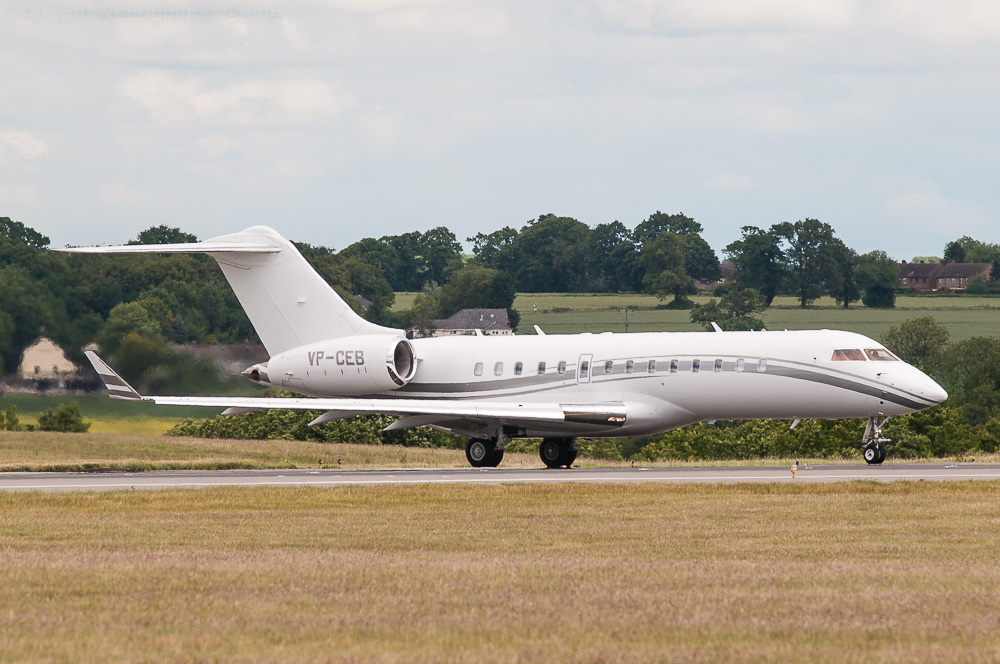
The Global Express was the first version of the Global series. The Global Express XRS is an improved Global Express. It is as big as its predecessor and is supposed to have an additional windows on each side: thirteen to the left, fourteen on the right. This results in less space between the cockit windows and the first cabin window. This is especially visibile on the right side, see photos below. However, we are not sure whether older Global Expresses have this extra cabin window as well, or that the number of cabin windows was optional.
Global 6000 is a new marketing name for the Global Express XRS, to bring it more in line with the rest of the Global line-up. It is not different from the XRS.
The Global 6500 is a Global 6000 with Rolls Royce Pearl engines and re-contoured wings. The engine nacelles are the same however, and the wing shape change is probably not visible either. So there is no way of distinguishing the Global 6500 from the Global 6000.

Bombardier BD-700-1A11 Global 5000/5500
The Global 5000 is somewhat shorter than the Global Express. So if you think: “what a short Global Express!”, it is probably a Global 5000. But you probably have to see them side by side to make the difference clearly visible. You can probably not trust the number of windows considering the story for the Global Express XRS.
Like the Global 6500 the Global 5500 is an improved Global 5000 with different engines and re-shaped wings. However, the external differences are not noticable.
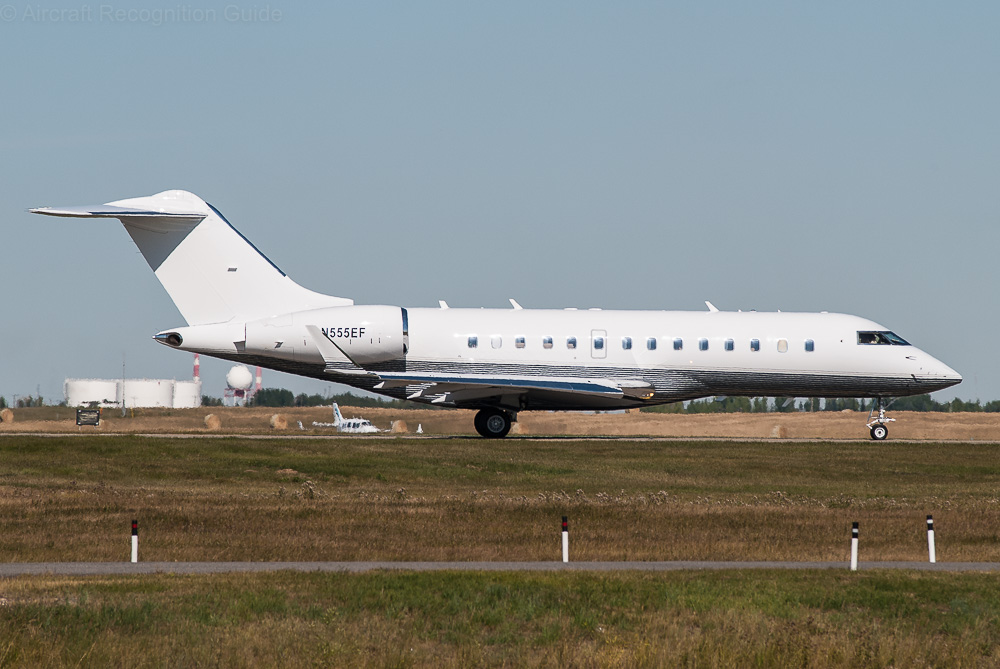
The Global 5000 is shorter than the Global 6000, but this is only obvious when you see them side-by-side.
Bombardier BD-700-2A12 Global 7500 & Global 8000
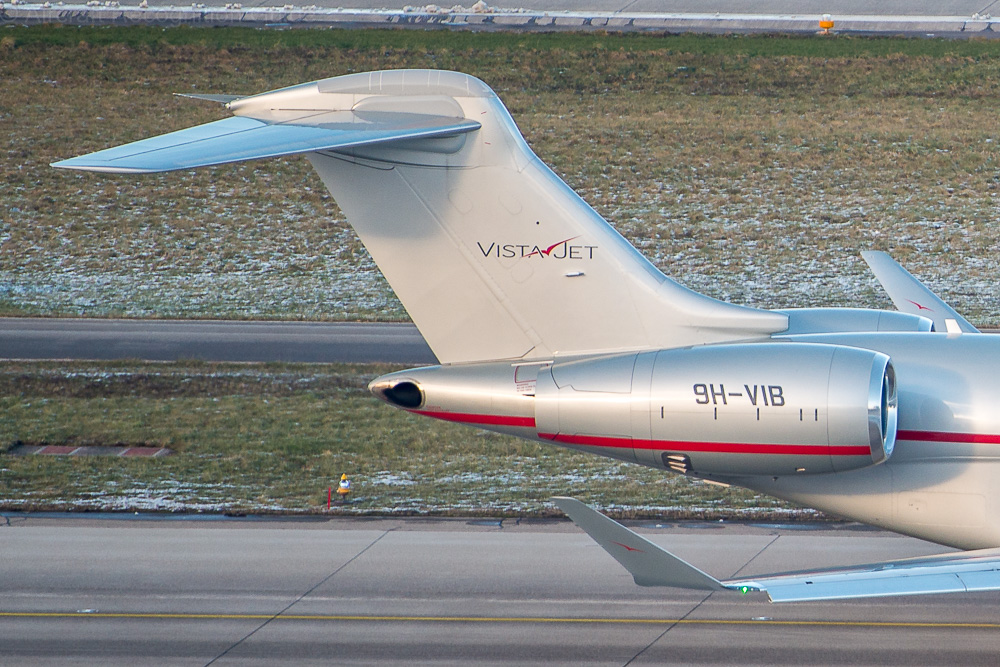
The Global 7500 is an improved Global 6000 to compete with the Gulfstream G650ER. It is more than three metres longer than the Global 6000, which makes it look more like a Regional Jet Series 700. The main difference compared to the CRJ700 is that the engines have a single exhaust, whereas the CRJ700s have a separate fan exhaust. Also the Global 7500 has a different top of the vertical stabiliser. Finally the cabin windows are significantly larger and the winglets are canted outward.
The Global 8000 was to be shorter than the Global 7500, but eventually it got the same dimensions as the 7500. There are supposed to be differences in the leading edge slats and the winglets, allowing it to fly faster and further. However, the details still elude us. Existing Global 7500s can be modified to 8000s, so indeed the differences cannot be that big.

Sentinel R1 & E-11A
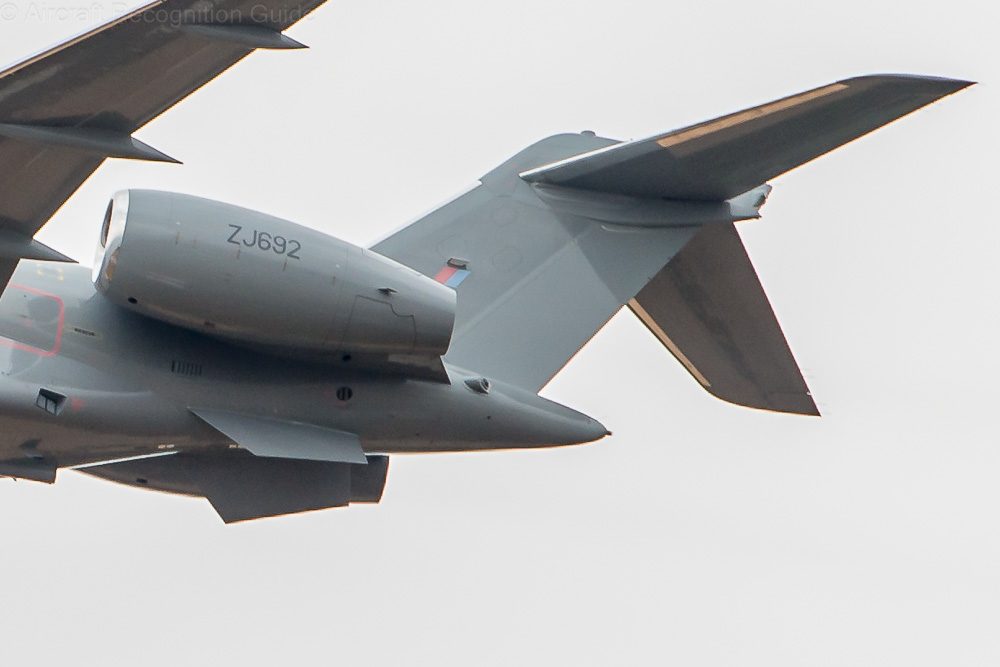
The Royal Air Force operated an airborne battlefield and ground surveillance version of the BD‑700, designed as Sentinel R1. It is fitted with large bulbs on top of and below the fuselage. To compensate for the disturbances, the Sentinel has two ventral fins and an extension on top of the vertical stabiliser.
The US Air Force has a similarly configured aircraft for battlefield support, known as E-11A.

Saab GlobalEye
Another military version is the GlobalEye, designated S106 in Swedish service. It is an airborne early warning variant, with a large bar placed above the fuselage. Like the Sentinel and E-11 this version has two ventral fins. In additiona, there are small fins halfway the horizontal stabilisers, up and down.

Saab offers an AEW version of the Global series, marketed as GlobalEye. The bar antenna on top of the fuselage is the key feature.
Global 6500 Athena
This modified Global 6500 is an intelligence, surveillance, and reconnaissance (ISR) aircraft of the United States Army. Athena stands for Army Theater-level High-altitude Expeditionary Next Airborne. It has the same canoe shaped bulge underneath the front fuselage as the E-11A and Sentinel R1. Also, the tail and ventral fins are the same. The Athena has no dome on top of the fuselage though, but many blade antennas, including T-shaped ones.

The Athena conversion of the Global 6500 looks similar to the Sentinel above, but has no bulge on top of the fuselage, only many blade antennas. (photo: SR_Planespotter, used with permission)
Similar aircraft
Some airplanes look so similar to the Bombardier Global that you may confuse them. Below you can read how to distinguish them.
Differences Global & Canadair Regional Jet 700
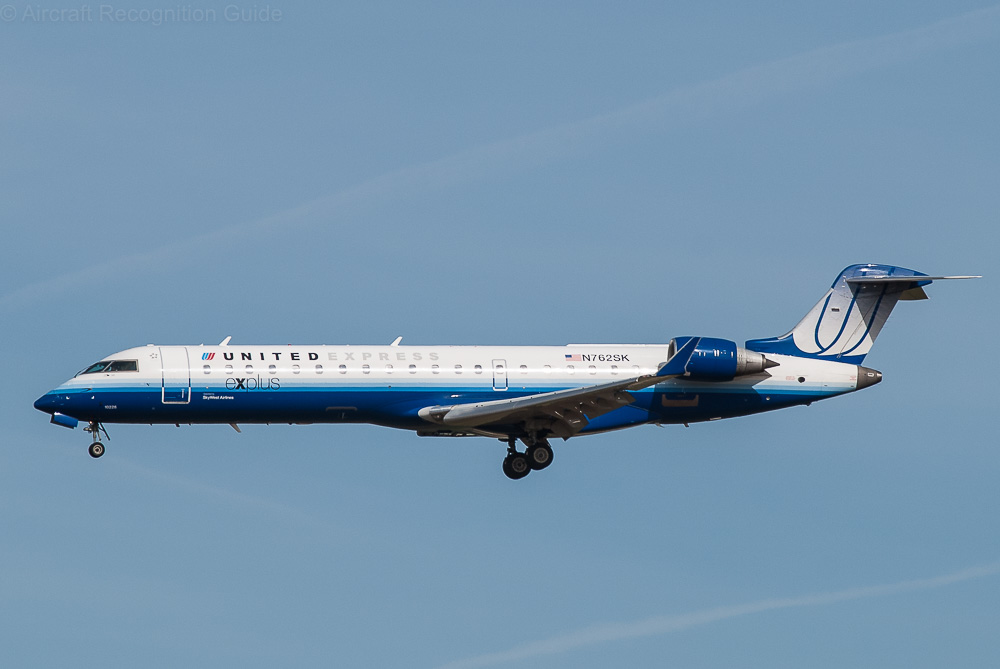
The Canadair Regional Jet series, especially the 700 as shown, is similar in appearance as the Global series, but has engine nacelles with a separate fan exhaust. Also the tail cone is shorter and has the APU exhaust at the end.
Differences Global & Gulfstream G500/G600/G650/G700/G800

The Gulfstream large cabin jets are the main competitor of the Global family. They are also similar in appearance, but have less, much larger oval cabin windows and different style cockpit windows. Also, the Gulfstreams have no intake in the dorsal fin and the APU exhaust is below the right engine.