
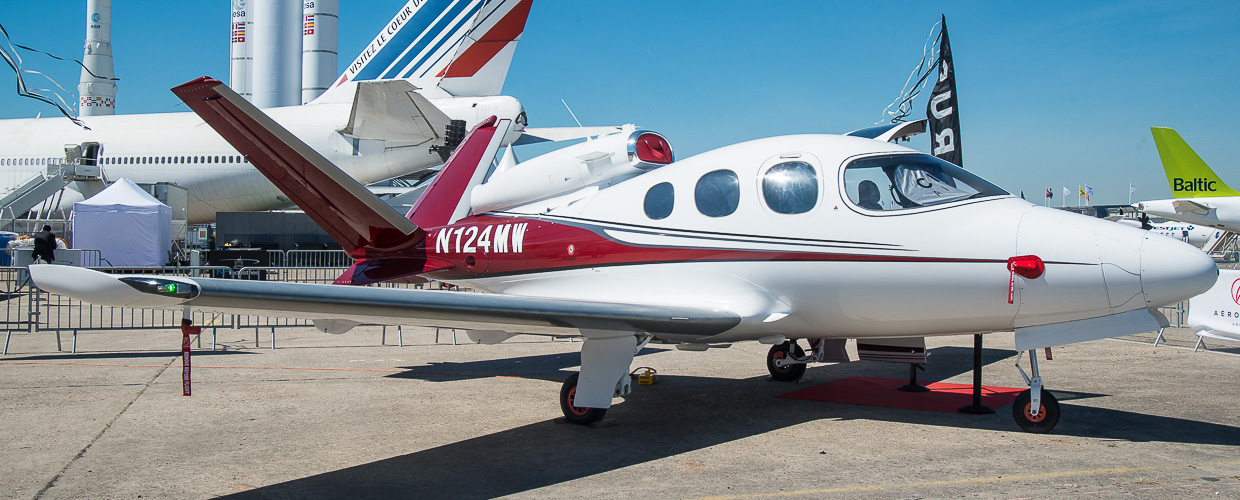
Cirrus SF50 Vision Jet
One of the smallest bizjets around is this very light jet developed by Cirrus Aircraft. It is one of the few true personal jets that have succeeded, against many failures. The SF50 is hard to miss when it comes to recognition. Its short “fat” fuselage with a single large cockpit window has three cabin windows. The jet engine is placed on top of the fuselage, much like on the Heinkel He162 in the 1940s. To make room for the exhaust a butterfly tail was added. This V-tail design with a jet engine on top of the fuselage makes the Vision Jet quite unique.
Basically there is just one version of the aircraft, although Cirrus launches 'new generations' from time to time. The Vision Jet G2 was introduced in 2019, with an improved performance and upgrades to the cabin and cockpit. In 2021 the G2+ was introduced with further upgrades. The Vision Jet G3 has a new bench in the rear and allows seating for six adults and a child in total. As you can read, none of the variants is externally distinguishable, except possibly for a dedicated standard paint scheme.

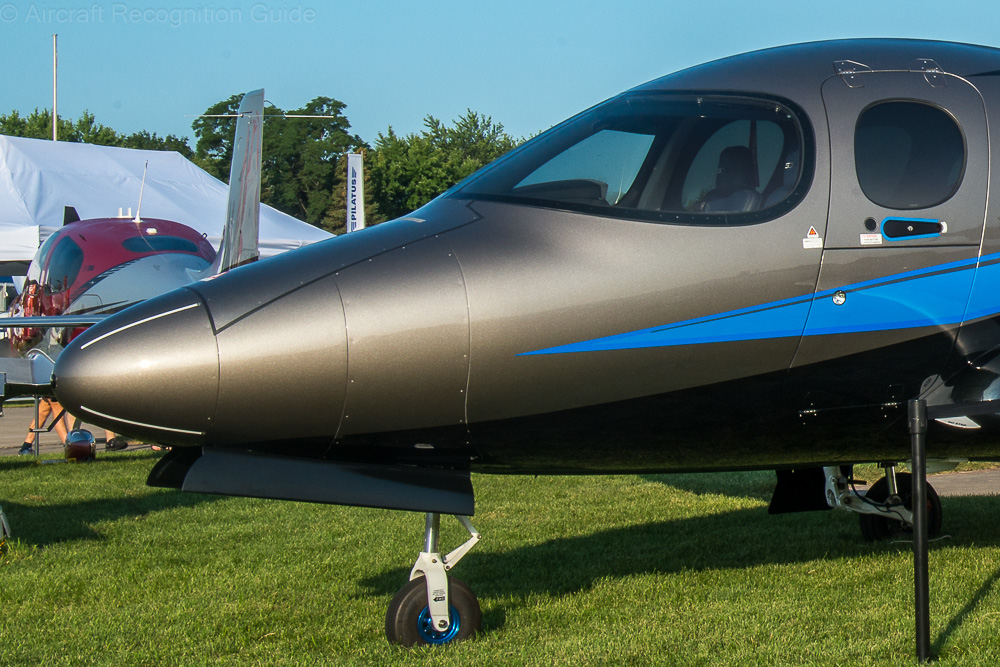
Similar aircraft
Some airplanes look so similar to the SF50 Vision Jet that you may confuse them. Below you can read how to distinguish them.
Differences SF50 Vision Jet & Eclipse 400

There is just one aircraft that comes close in appearance to the Vision Jet, this Eclipse 400. The Eclipse has the engine more on a pylon than the Cirrus aircraft. Also the Eclipse has a cabin/side window less than the Cirrus. Finally, the Vision Jet has ventral fins. (photo: D. Miller/WikiMedia)

Differences SF50 Vision Jet & Flaris LAR01
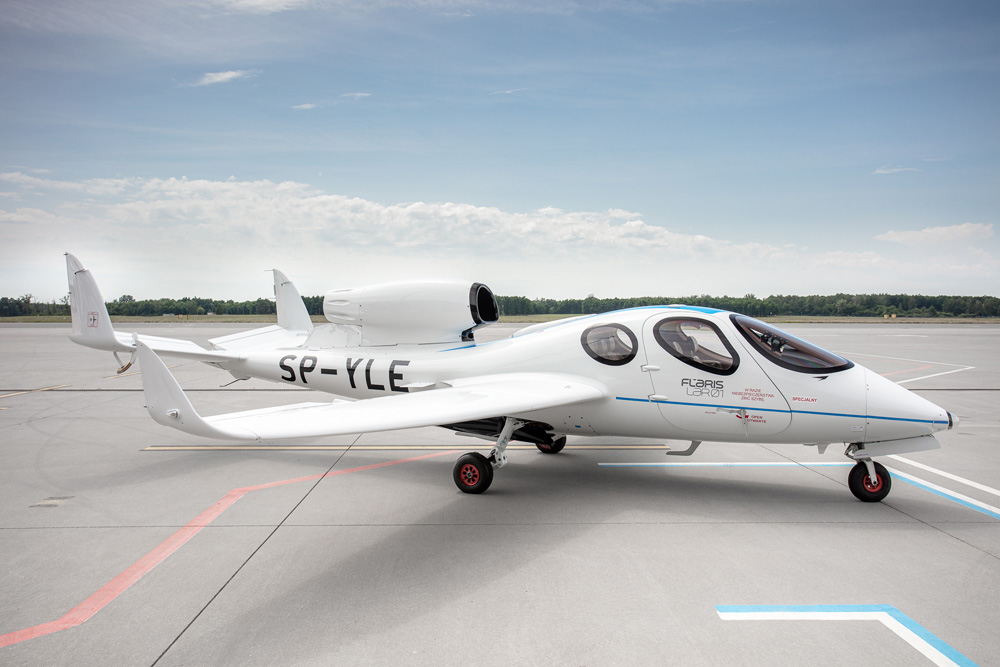
Like the Cirrus SF50 the Flaris LAR01 has the single jet engine on top of the fuselage. Its intake is circular but with a cut-off at the bottom. Unlike the Cirrus (and Eclipse 400) the LAR01 has an H-tail with pointed tops, similar to the winglets. The main gear retracts rearward in the slender rear fuselage. (photo: Flaris)