
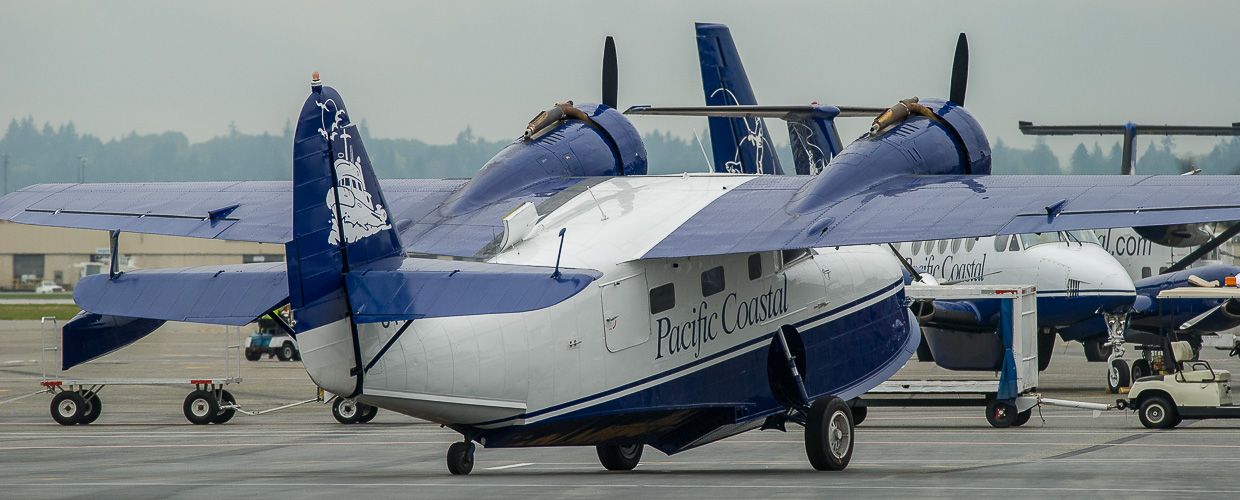
Grumman G.21 Goose
The Goose was the first of the famous Grumman line of amphibian airplanes, developed in response to a need to fly from Long Island to as close to New York City as possible. An amphibian would best do the job. So the airplane started civil duties, but was also much used by the military during World War II. Grumman model G.21 is a high wing aircraft. Its engines are placed in the wing leading edge. Fixed floats are below the outer wings. The fuselage has a boat shaped underside and front, with a flat top of the nose. At the end of the boat hull is a retractable tail gear. The Goose has four flat cockpit windows, of which the front two have curved upper edges that curve inward to the middle window frame, typical for the original Goose. There have been after market modifications though. The single wheel main landing gear is attached to the side of the fuselage, below the cockpit windows. It retracts in the side of the fuselage. At the back is a low, rounded vertical stabiliser, that also holds the braced horizontal stabilisers. The rudder includes the whole top of the vertical fin and goes down to the tailcone.
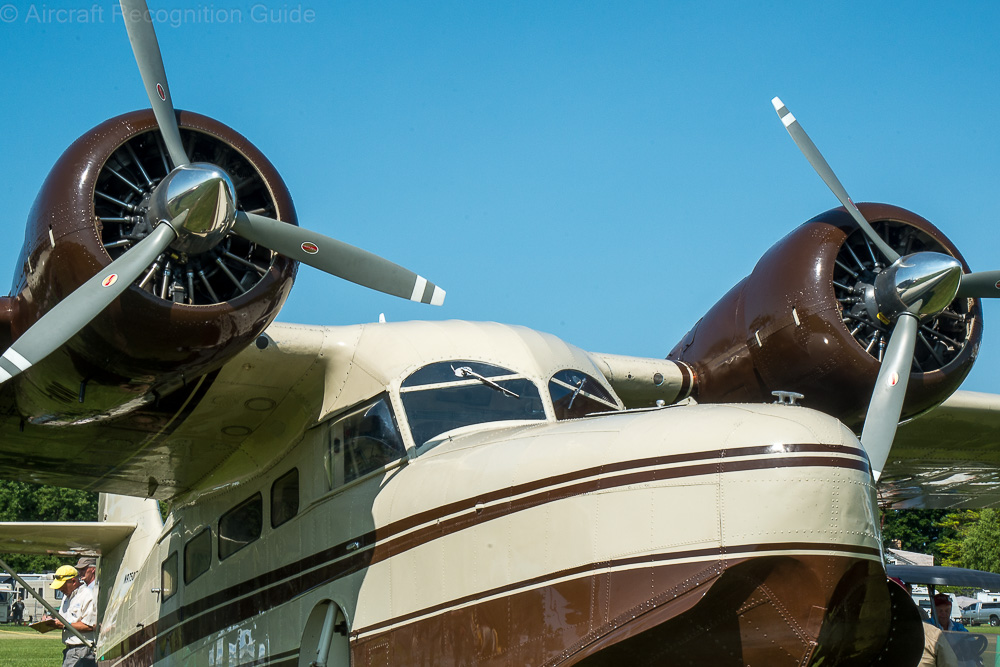
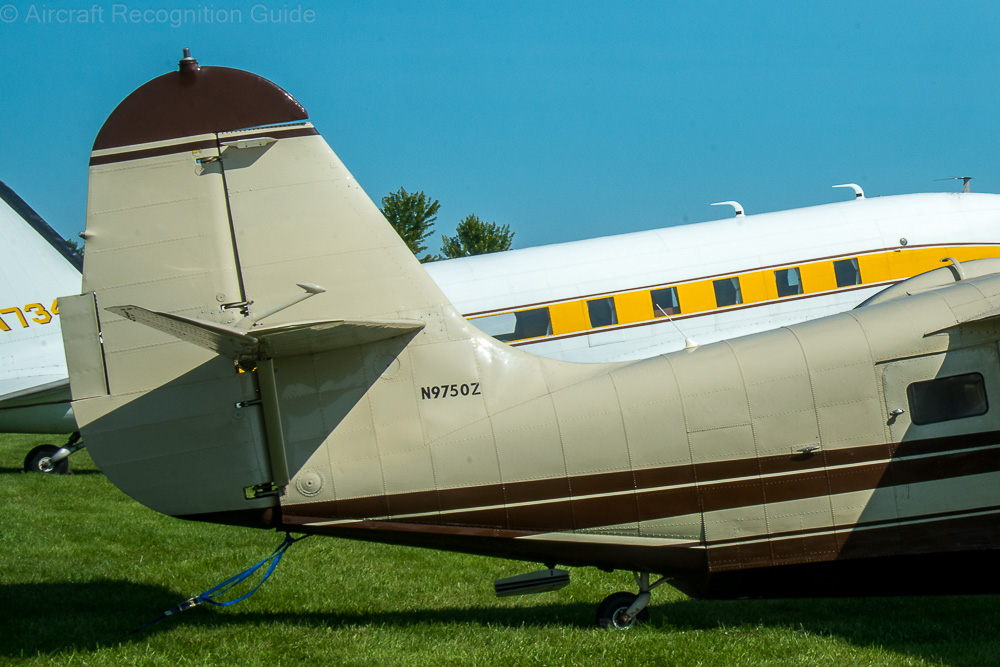
How to recognise the different versions of the G.21 Goose
The different versions of the Grumman G.21 can be identified by looking at (amongst others)
- the shape of the engine nacelles
- the shape of the nose
- the number of cabin windows
- the shape of the vertical stabiliser
- whether the wings can be tilted
More details will follow later.
Similar aircraft
Some airplanes look so similar to the Grumman Goose that you may confuse them. Below you can read how to distinguish them.
Differences Grumman Goose & Grumman Widgeon
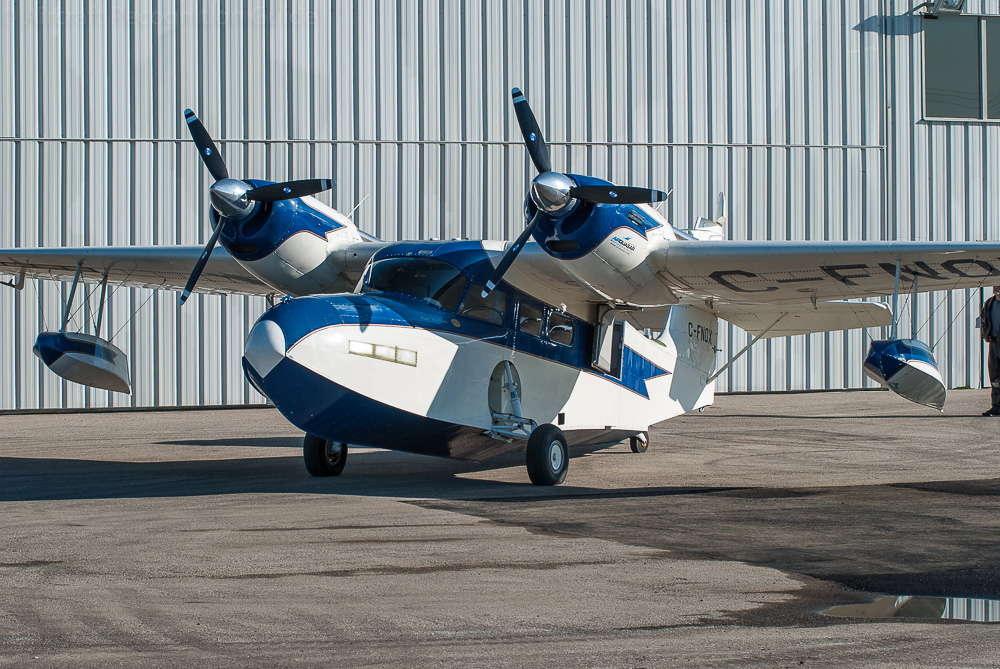
The Grumman Widgeon is a close look-a-like of the Goose, but is somewhat smaller. Moreover, it has inverted inline piston engines instead of radials, and curved cockpit windows as main difference. Also, the vertical fin has nearly straight edges and the horizontal stabilisers are placed higher.
Differences Grumman Goose & Short Sealand
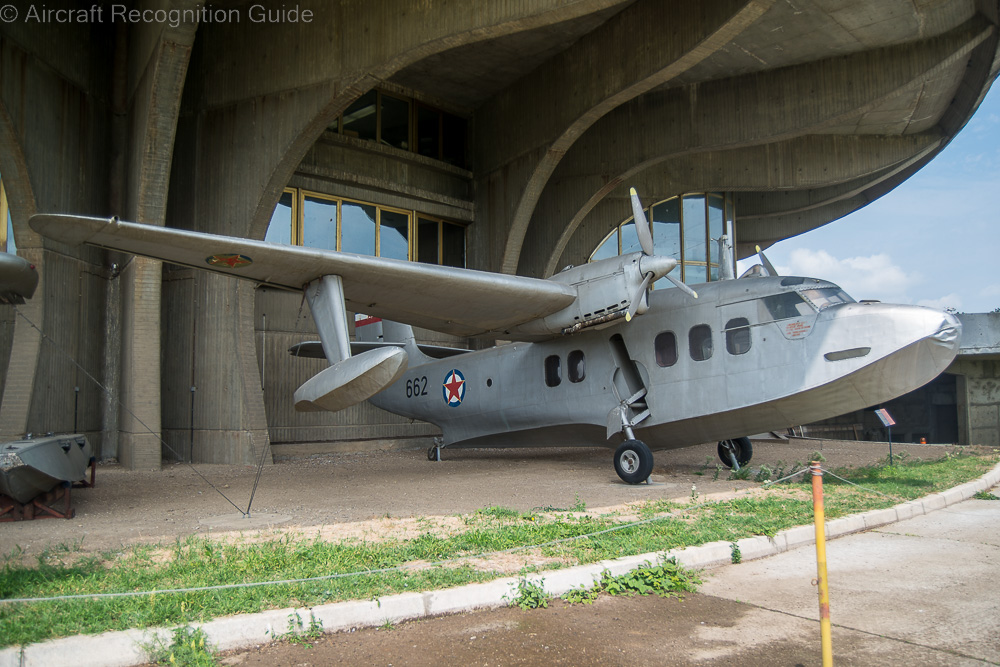
The Sealand amphibian has a similar appearance as the Goose, but is clearly longer. It has a nearly rectangular tail though, inline piston engines and larger, rectangular cabin windows that are higher than wide.
Differences Grumman Goose & Ellison-Mahon Gweduck
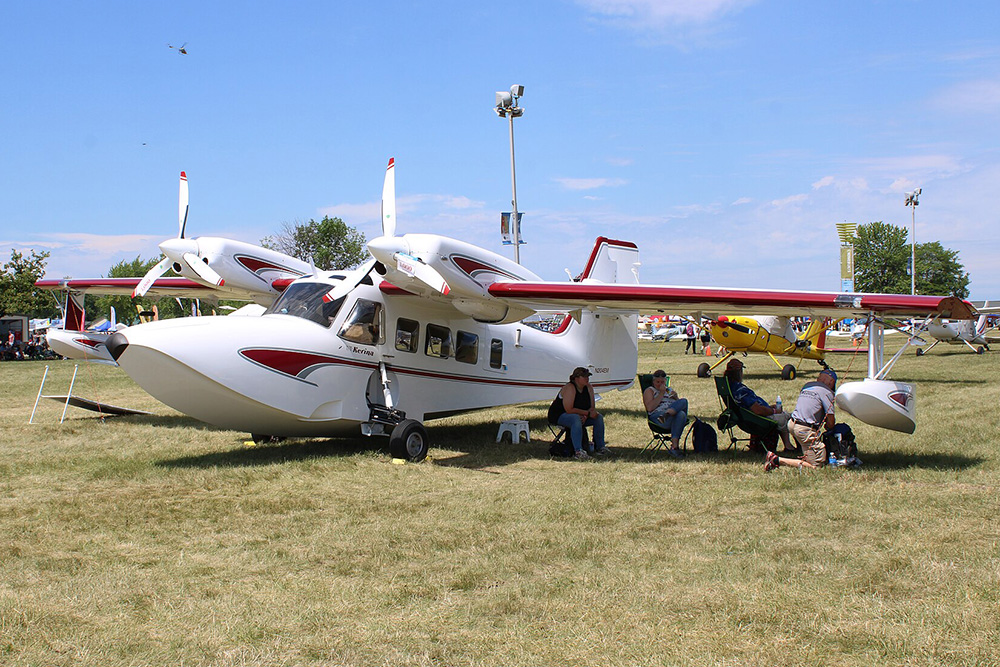
The Gweduck is more similar to the Widgeon than the Goose, and has similar differences compared to the G.21. These are a non-rounded, trapezium tail, longer and pointed nose, curved cockpit windows and larger cabin windows, to name the most important. (photo: ZLEA/Wikimedia, modified)
_(7-28-2023).jpg)
Differences Grumman Goose & Grumman Mallard

One of the successors of the Goose is the Grumman Mallard. The G.73 Mallard is larger with a taller tail, no braced horizontal stabilisers and a nose gear undercarriage.
Differences Grumman Goose & Piaggio P136
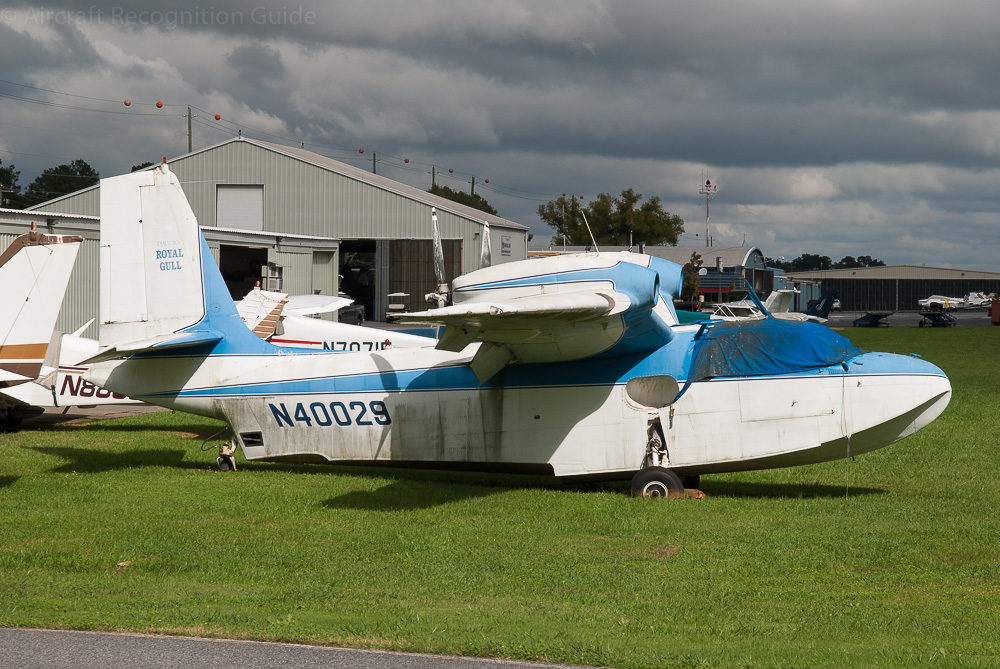
The most obvious difference between the G.21 Goose and the Piaggio P136 is of course that the P136 has inverted gull wings with piston engines on top of them, driving pusher propellers. Additionally, the P136 has a more slender fuselage than the Goose, a trapezium tail and a retractable tail gear that remains visible.