

Kawasaki C-1
Japanese military transport entered the jet age with the Kawasaki C-1. Like other military transport aircraft the C-1 has high wings and a T-tail, with a ramped up rear fuselage to facilitate loading. Under the wings are two engines in long, slender nacelles with clamshell thrust reversers. They are attached to the wings with fairly long pylons. The C-1 has four-wheel main landing gears on each side. These retract forward in big pods next to the fuselage.
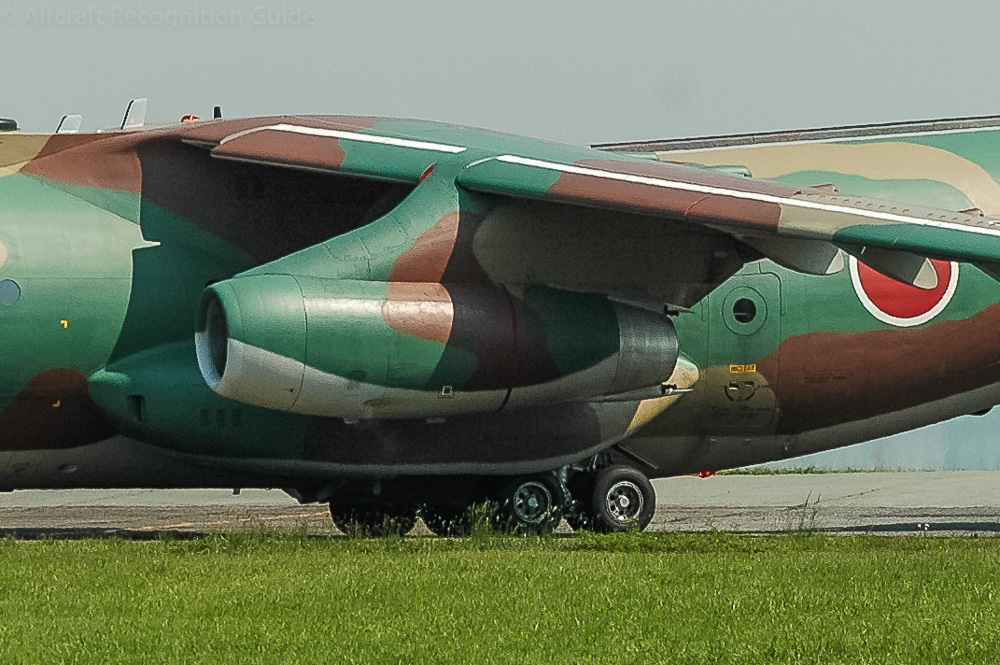
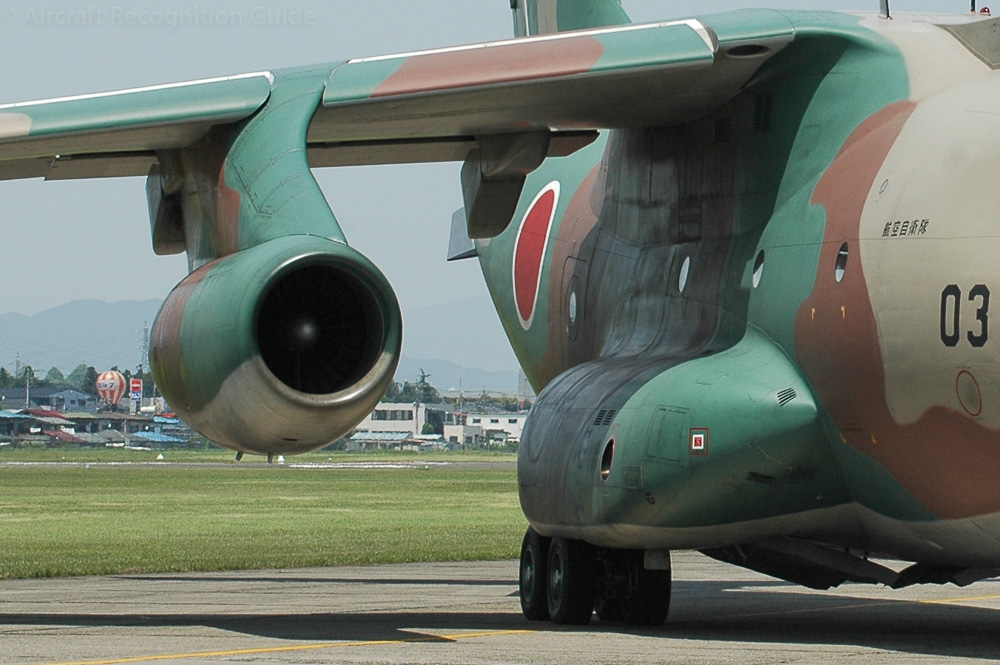
How to recognise the different versions of the C-1
The different versions of the C-1 can be distinguished by looking at
- the presence of a long probe on the nose
- the presence of bulges on the nose and rear fuselage
XC-1 & C-1
The main production version was the C-1 transport aircraft. The XC-1 prototypes only differ from the production aircraft by the long tube on the nose.
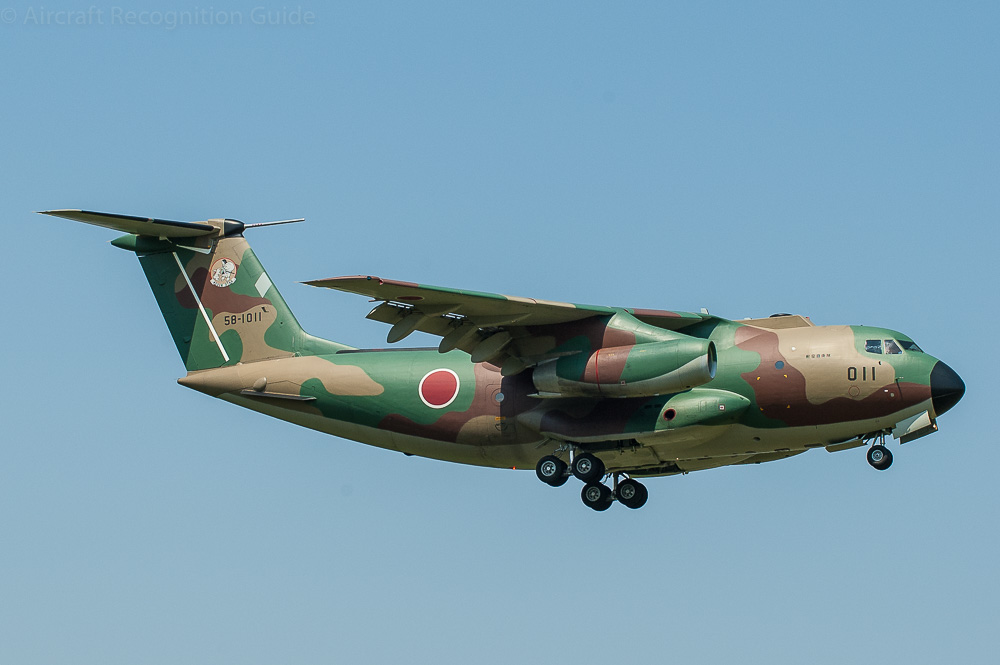
A standard JASDF Kawasaki C-1 on approach.
C-1FTB
In support of the development of the Kawasaki C-1, one aircraft was dedicated for testing, called the C-1FTB. It has a boom extending from the nose.

The C-1FTB flight test aircraft for the C-1 has a long boom on the nose. It also retained the prototype all metal finish. (photo: Alan Wilson/WikiMedia)
EC-1
Apart from the standard transport version, the JASDF also had a single electronic intelligence (ELINT) version, designated as EC-1. It has multiple bulges, especially on the nose, but also smaller on side and rear of the fuselage.

.jpg)
Even though the photo is a bit dark, the large radome on the nose of this Kawasaki EC-1 is clearly visible.
Similar aircraft
Some airplanes look so similar to the Kawasaki C-1 that you may confuse them. Below you can read how to distinguish them.
Differences Kawasaki C-1 & Embraer C-390

When it comes to looks the Embraer C-390 Millenium (also known as KC-390) is the most likely candidate for a mix-up. The C-390 has a typical triangular cockpit side window as feature. Also the engines are closer to the wings than on the C-1. Finally, a refuelling probe above the cockpit is standard on the C-390.
Differences Kawasaki C-1 & An-178

The An-178 cargo aircraft has relatively large engines with separate exhausts for fan and core flows. Other recognition points are the two tandem wheels on each main landing gear, winglets and a wing-fuselage fairing that starts at the cockpit. The similar shaped An-148 and An-158 have many cabin windows and are thus less likely to be confused with the C-1.