
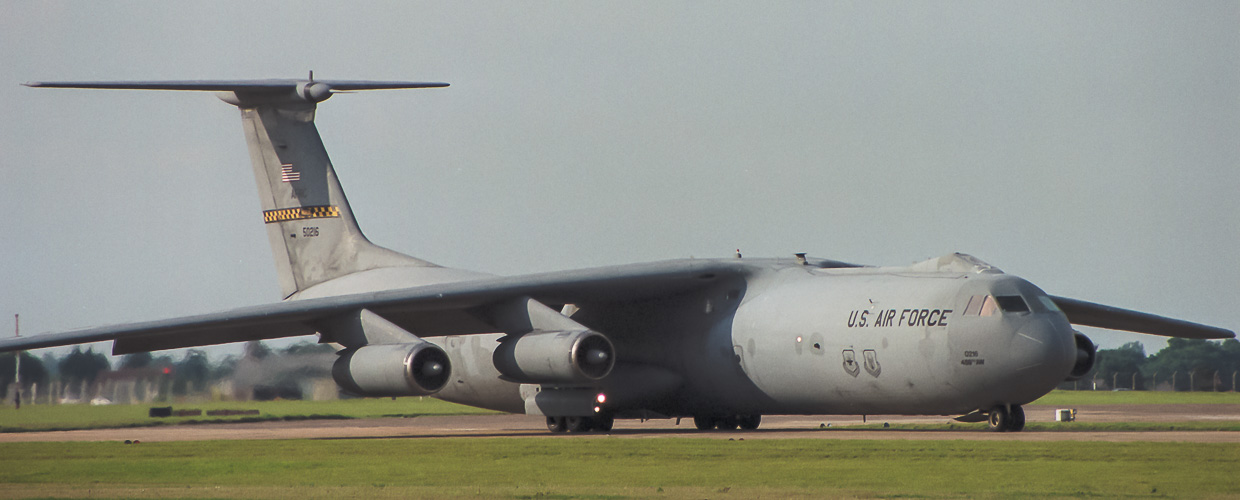
Lockheed C-141 Starlifter
For USAF's first long range jet transport aircraft Lockheed designed model 300, designated C‑141 Starlifter in US military service. Unlike the C-135 already in service it has rear loading doors in the upward sweeping rear fuselage. The underside of the fuselage is close to the ground thanks to the short undercarriage. The main gear has four-wheel bogeys that retract into fairings at the side of the fuselage. The nose gear has two wheels. To keep the engine away from the ground the L-300 has high mounted swept wings, with the jet engines in slim nacelles underneath. Spinners of the compressor extend from the front, because it is close to the front of the nacelle. All engines have clam-shell thrust reversers. The T-tail has a small dorsal fin and a small bullet fairing on top.
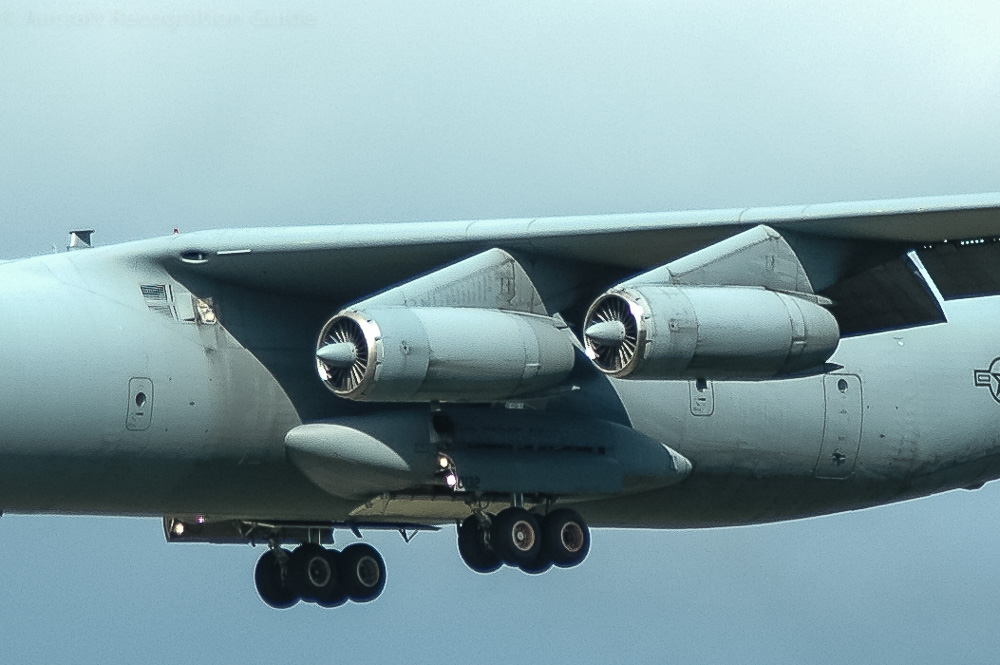
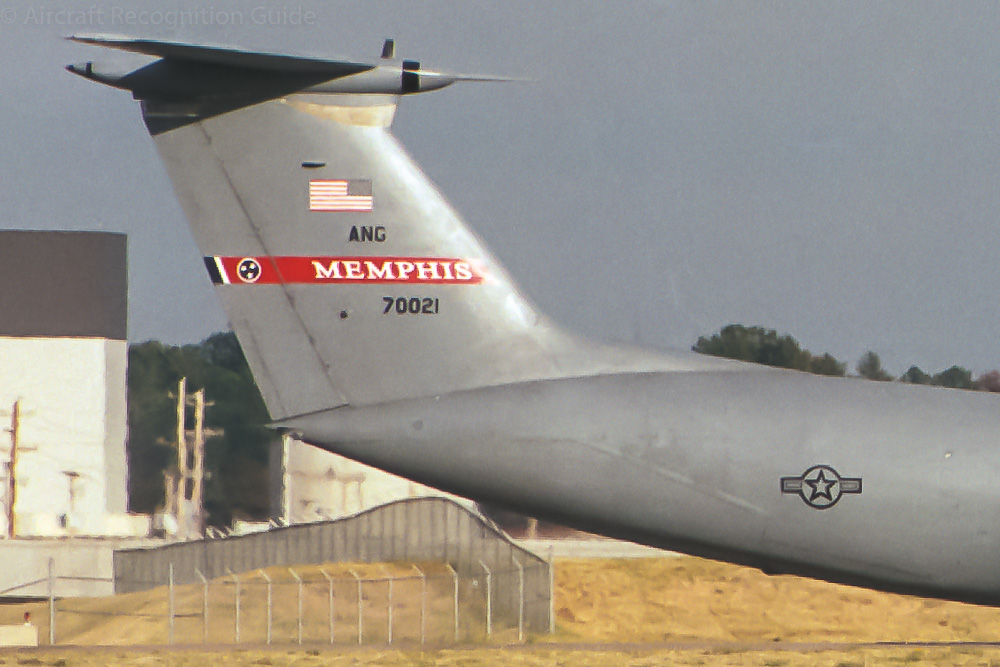
How to recognise the different versions of the C-141 Starlifter
The different versions of the Lockheed C-141 Starlifter can be recognised by
- the fuselage length
- the presence of a refuelling point above the cockpit
C-141A
The first version of the Starlifter has a shorter fuselage than later versions. Also, it has no refuelling receptor on top of the fuselage, after the cockpit. All aircraft were built as such, designated C-141A. The one execption is the only civilian Starlifter, that retained the L-300 designation.
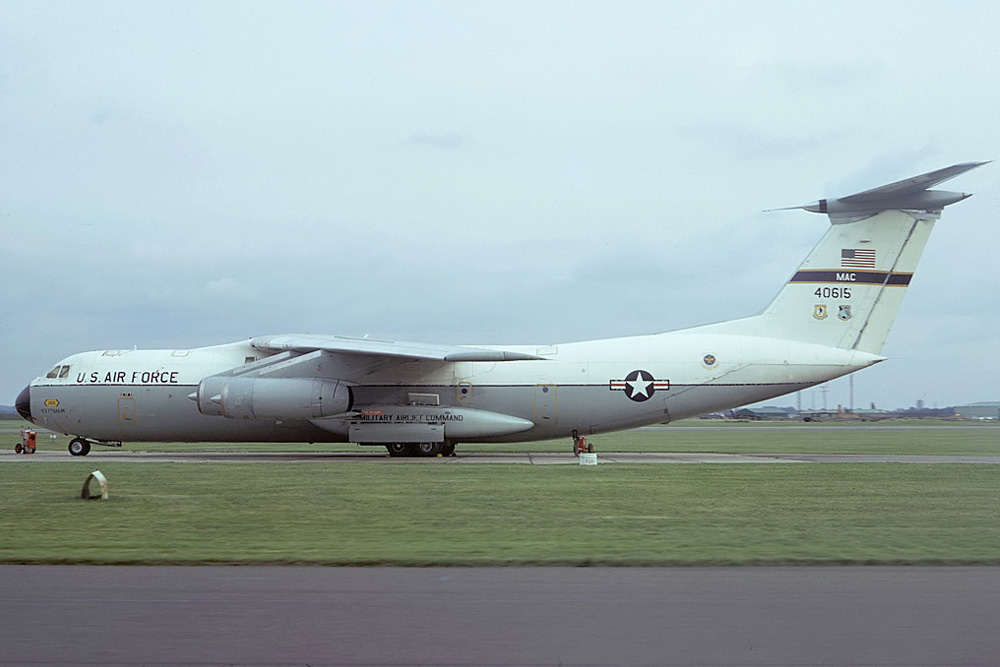
Compare the length of the fuselage of this C‑141A with that of the C‑141B and you will immediately notice this large difference. (photo: Mike Freer/WikiMedia)
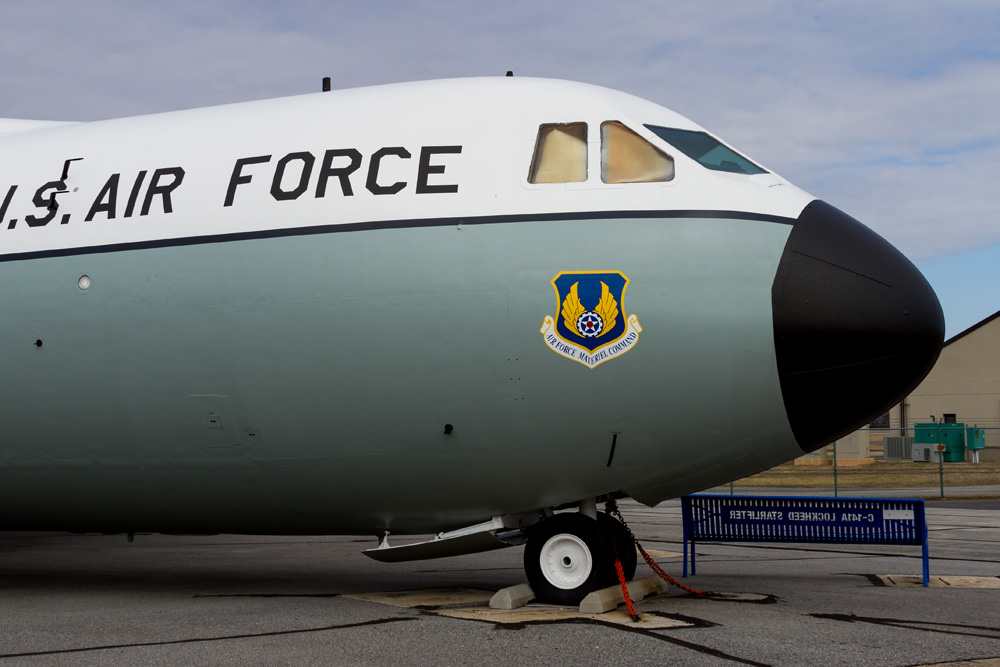
The C-141A has no receptor for a refuelling boom on top of the fuselage, behind the cockpit. (photo: Balon Greyjoy/WikiMedia)
C-141B
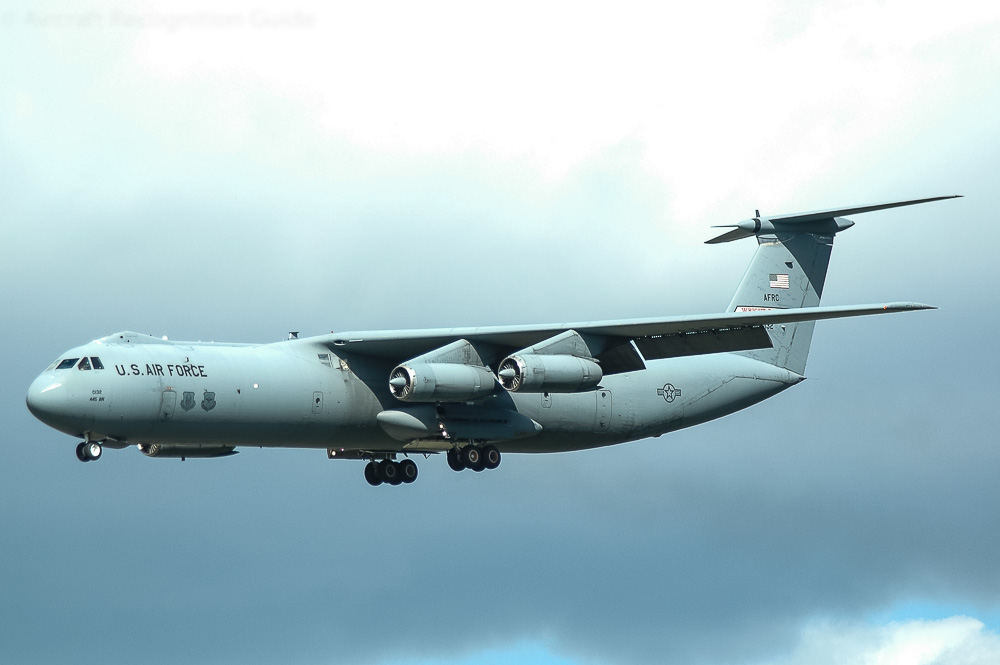
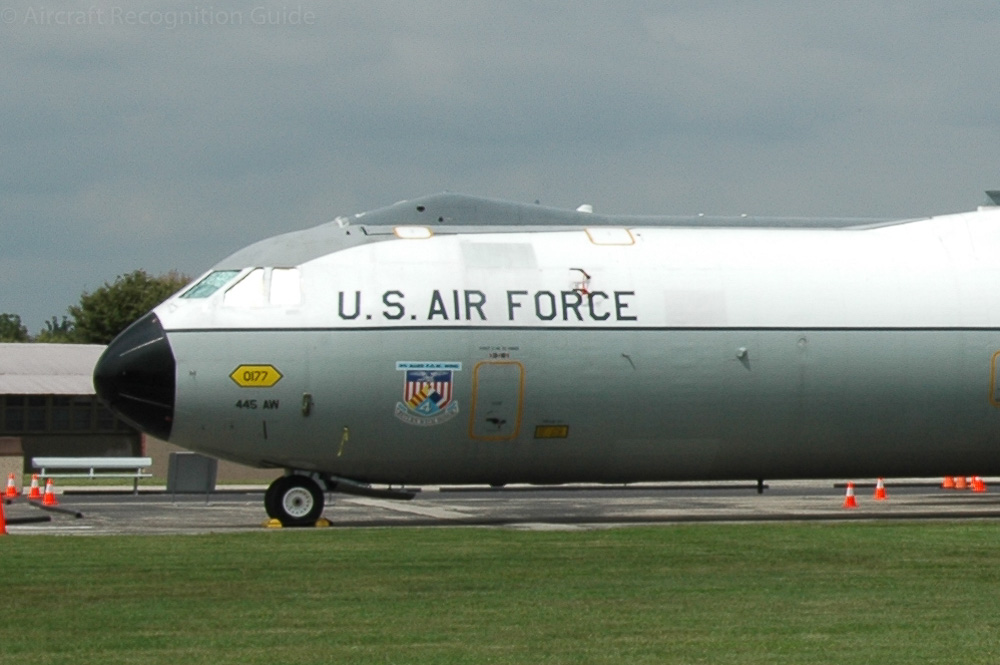
As the C-141A had enough lifting capability but not enough volume, the fuselage was stretched by more than 7 metres to create the C-141B. Apart from the length the bulge of the refuelling receptor on top of the fuselage is a recognition point. All C-141B are converted C-141As; no new C-141Bs were built.
C-141C
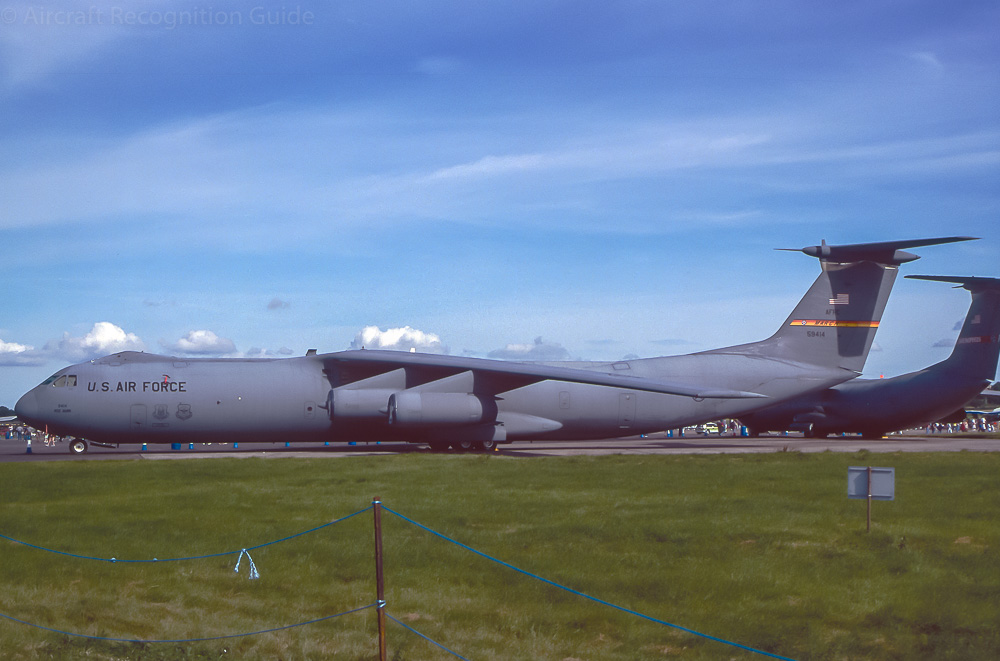
A cockpit modernisation programme led to the C-141C. However, from the outside we have discovered no differences compared to the C-141B.
,_USA_-_Air_Force_AN1540450.jpg)

The C-141C was the last version of the Starlifter, which is externally identical to the C-141B.
Similar aircraft
Some airplanes look so similar to the C-141 Starlifter that you may confuse them. Below you can read how to distinguish them.
Differences C-141 Starlifter & Il-76
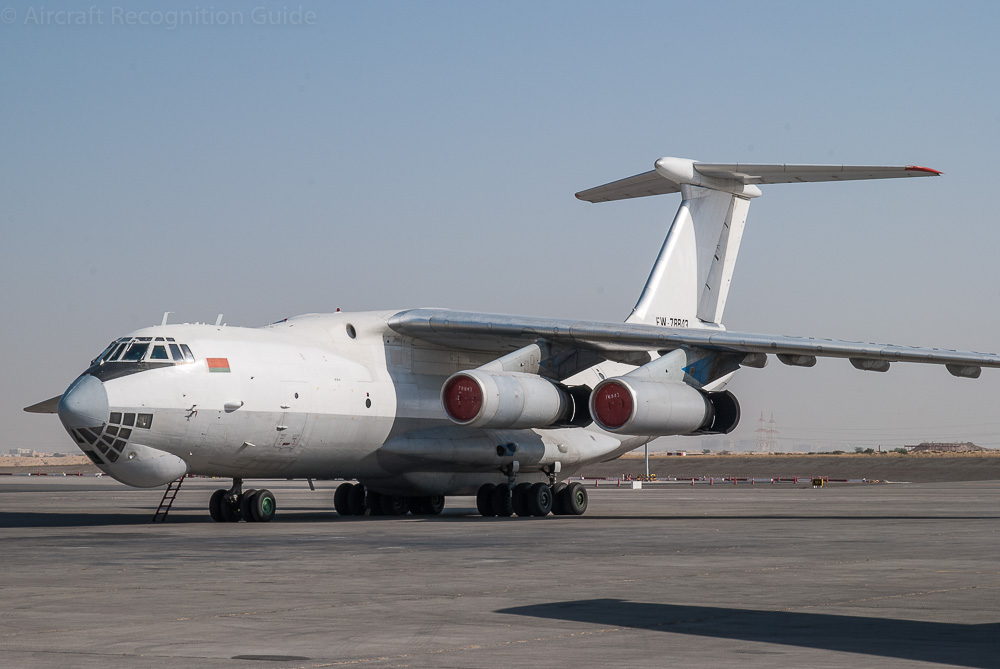
Especially the wings and engines (and possibly the tail) of the Il‑76 might confuse you as they look similar to those of the C‑141. However, the Il-76 has a glass nose and many more wheels on the landing gear (twenty instead of ten, with four on a single axis). Also the fuselage is wider.
Differences C-141 Starlifter & Xian Y-20
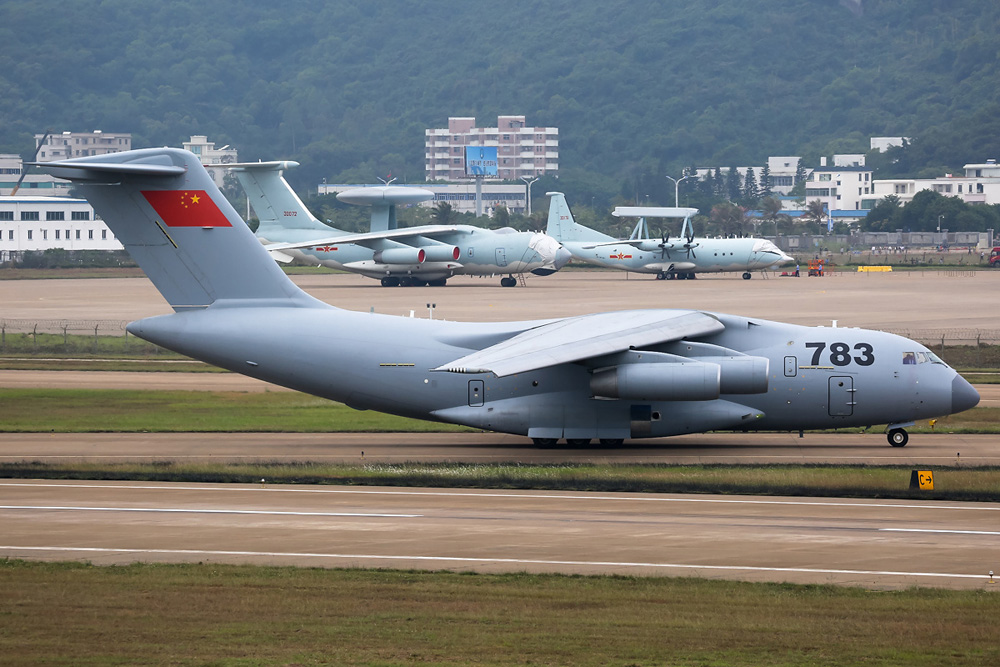
The Xian Y-20 looks like a composition of the Il-76 (wings and engines), and C-17 Globemaster III (tail and landing gear). Mainly the engine nacelles are similar to those of the C‑141, but in other aspects they are significantly different.
Differences C-141 Starlifter & C-5 Galaxy
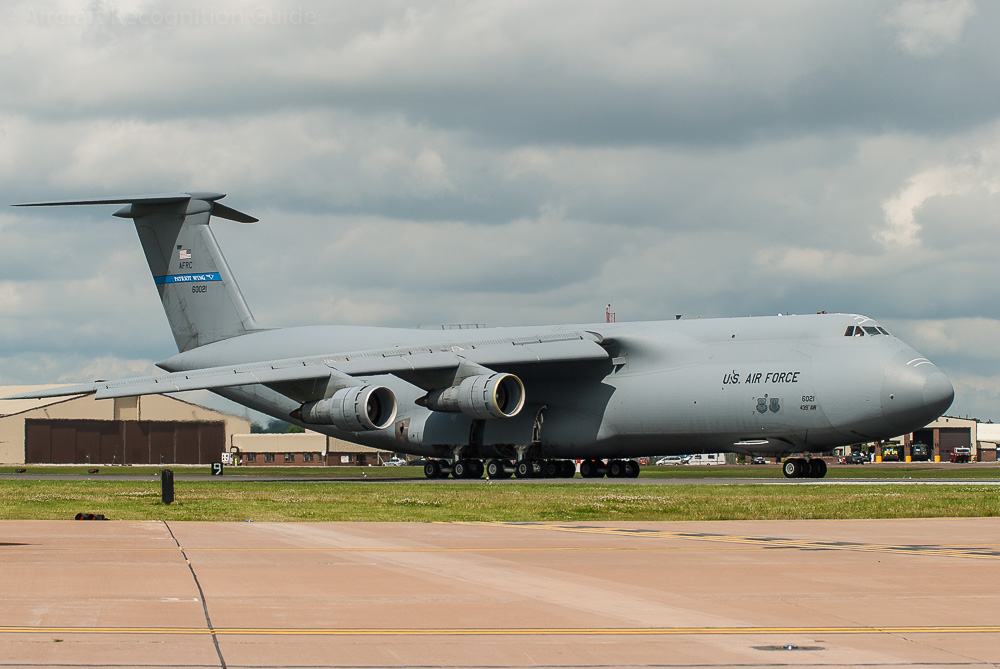
The heritage of the C-141 is still partly visible in the much bigger C-5, especially the cockpit windows and bullet fairing on top of the vertical stabiliser. Additionally, the C-5 has a pointed tail cone, separate fan exhaust for the engines and many more wheels.
Differences C-141 Starlifter & C-17 Globemaster III
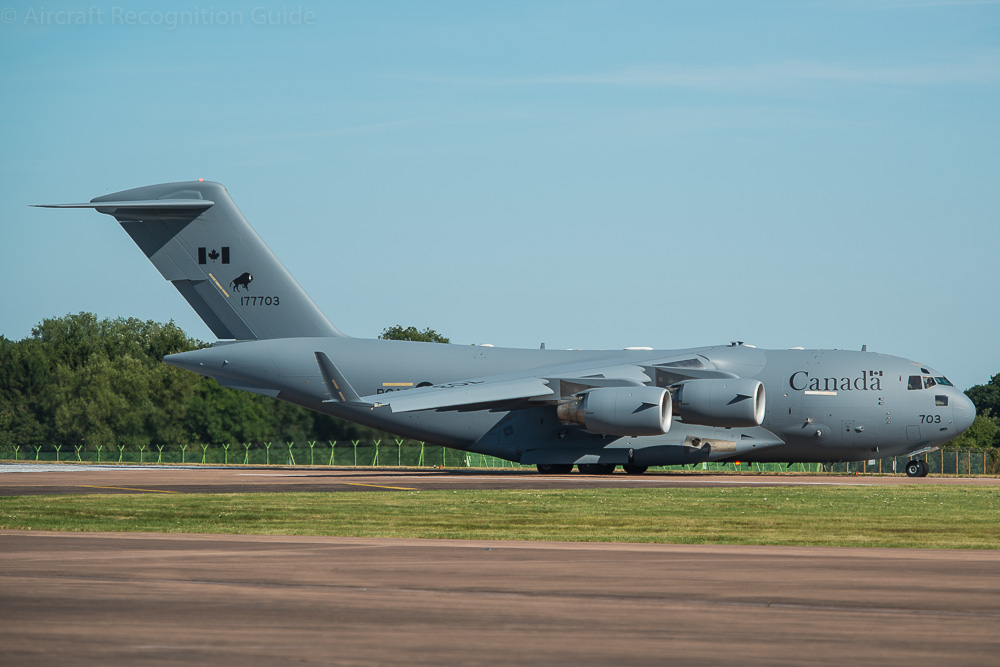
The C-17 is of the same aircraft class and even the successor of the C-141. The C-17 has a wider fuselage, different cockpit windows, winglets, a pointed tail cone, a separate fan exhaust for the engines and no bullet fairing on top of the vertical stabiliser.