

Saab 35 Draken
Like many other fighter designs of the Swedish company the Draken has a unique appearance. The Saab 35 has double delta wings. The inner wings have a very large sweep angle, much larger than the outer wings. They can also be seen as leading edge extensions of the main wings. Where the inner wings meet the fuselage the egg shaped air intakes are placed. The fighter has no canards nor horizontal stabilisers, just a big cropped triangle shaped vertical stabiliser, with a long base. The single wheel main landing gear retracts outward in the wings. Finally, the Draken has a double tail wheel to prevent tail strikes due to over rotation.
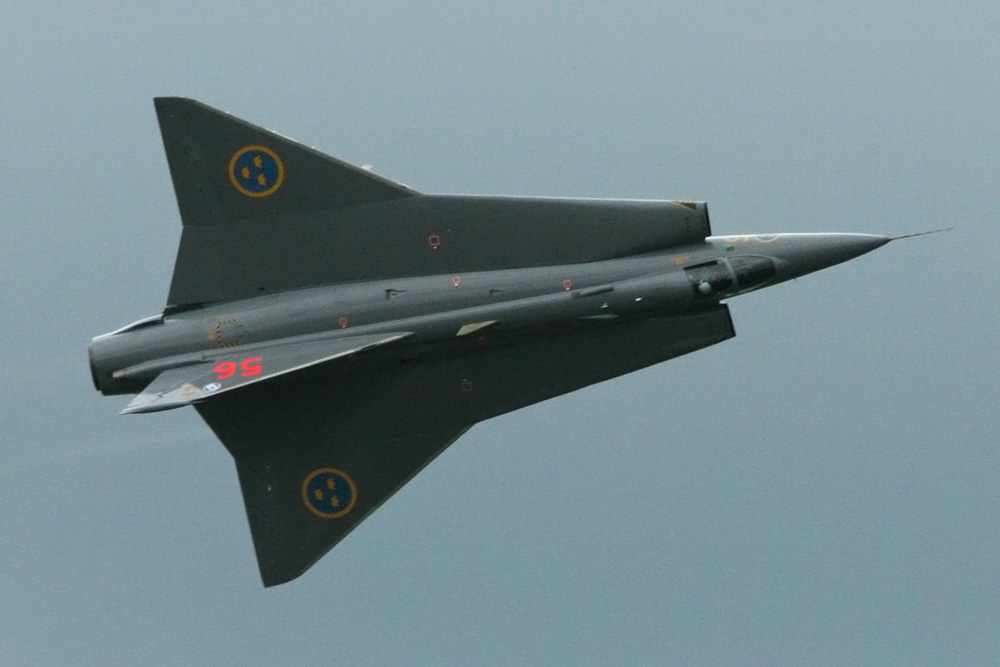

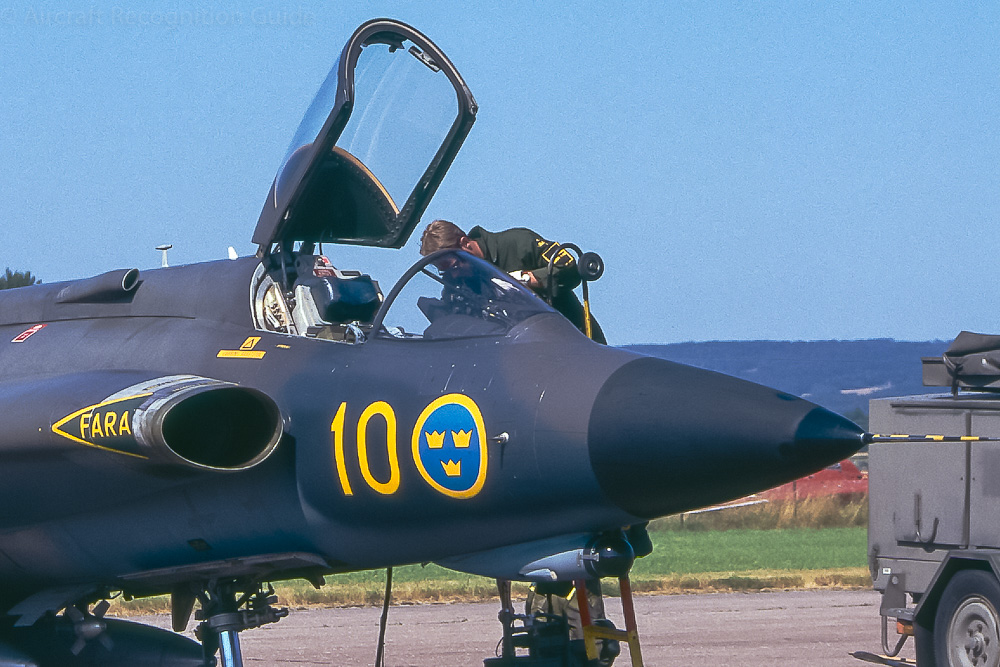
The air intakes of the Saab Draken are in the roots of the inner wings. They have the shape of an egg: oval but with an off centre widest point. This is better visible on the top photo.
How to recognise the different versions of the Saab Draken
The different versions of the Saab Draken are characterised by:
- the shape of the canopy
- the length and shape of the exhaust
- the length of the air intakes
- the shape of the nose
- the number of cannons
- the shape of the outer wings
- the location of a whip antenna on the vertical stabiliser
- the presence of a triangular fin on top of the fuselage, and its shape
- the presence of a triangular fin below the wing tips
- the presence of a radar warning receiver on top of the vertical stabiliser
- the presence of a double wheel tail gear
- the presence of an infrared sensor under the nose
J35
The prototype Drakens were powered by imported Rolls-Royce Avon engines with original afterburner. These have shorter exhausts than the later Svenska Flygmotor designed ones. Also, the rear of the fuselage is canted, exposing a part of the nozzle. Similarly, the end of the drag chute housing behind the vertical fin is canted in the opposite direction. There is a forward pointing needle antenna about a quarter of the tail fin height below its tip.
Additionally, the canopy is characteristic, as it has a single bow frame splitting the non-bulged canopy in two. It is complemented by a small square window behind the main windows. On top of the fuselage is a small triangular auxiliary vertical fin, well ahead of the regulation vertical stabiliser. Finally, like many prototype aircraft, there is a large needle on the nose to measure the undisturbed air flow.

The prototype of the Saab 35 Draken (J35) in full flight. It has a clean configuration here and the large needle antenna on the nose is one of its key features. Also note the small square window just above the air intake. (photo: Flygvapenmuseum/Wikimedia, modified)
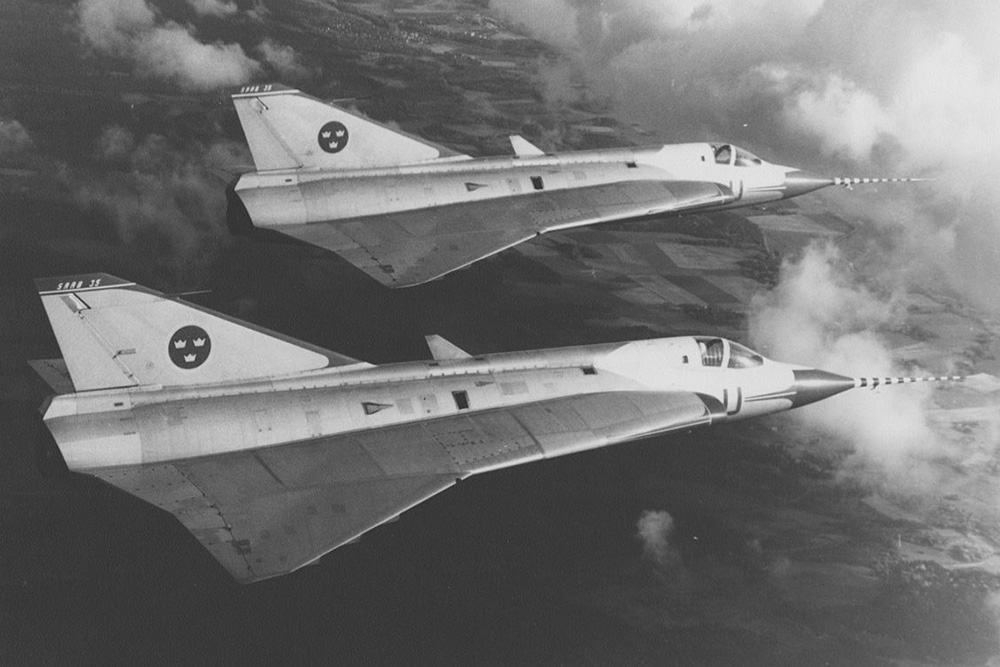
This photo is to show the rear of the prototype Draken, with the canted exhaust partially showing the exhaust pipe, and the opposite canted drag chute housing above. The pitot tube pointing forward from the vertical stabiliser and the auxiliary triangular fin on top of the fuselage are well visible as well. (photo: Flygvapenmuseum/Wikimedia, modified)
J35A (J35A1)
The first production version still has a short rear fuselage, being only slightly longer than that of the prototypes. This rear is not canted, nor is the drag chute housing. There is a tail skid under the rear fuselage. The needle antenna in the vertical fin’s leading edge is placed closer to the top. The fairing behind the opening part of the canopy is now transparent, and gone is the small square window. The J35A has two cannons, one on each side in the middle of the inner wings, behind the air intake. Finally, there is a much smaller pitot static probe on the nose and the triangular fin on the fuselage has a less swept trailing edge.
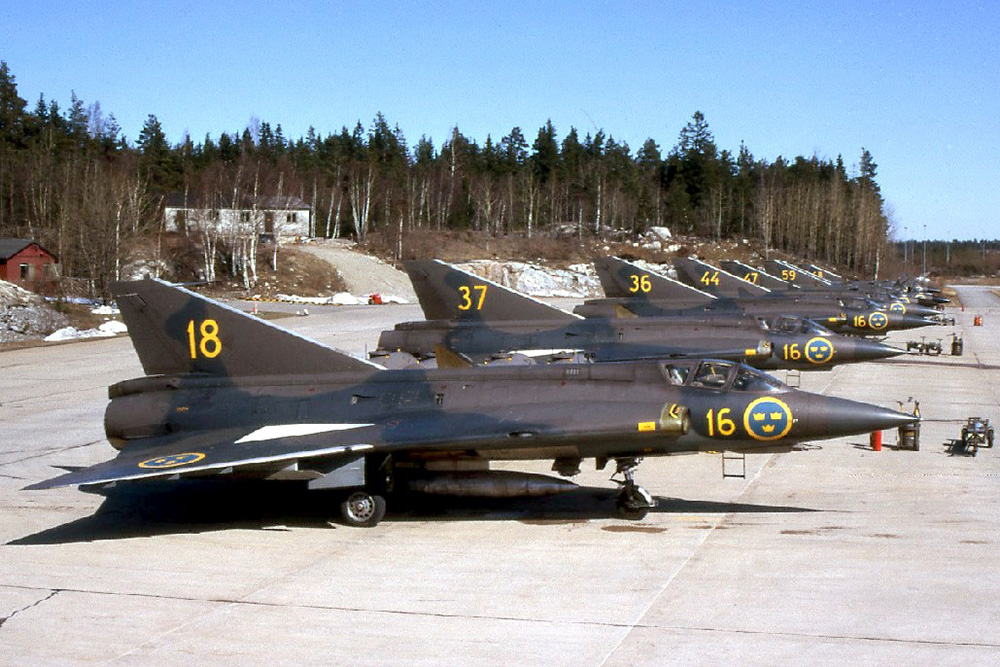
The short, non-canted exhaust of the J35A is evident on this photo. Furthermore note the fully clear rear part of the canopy, and the higher placed pitoto tube on the tail. (photo: Towpilot/WikiMedia, modified)
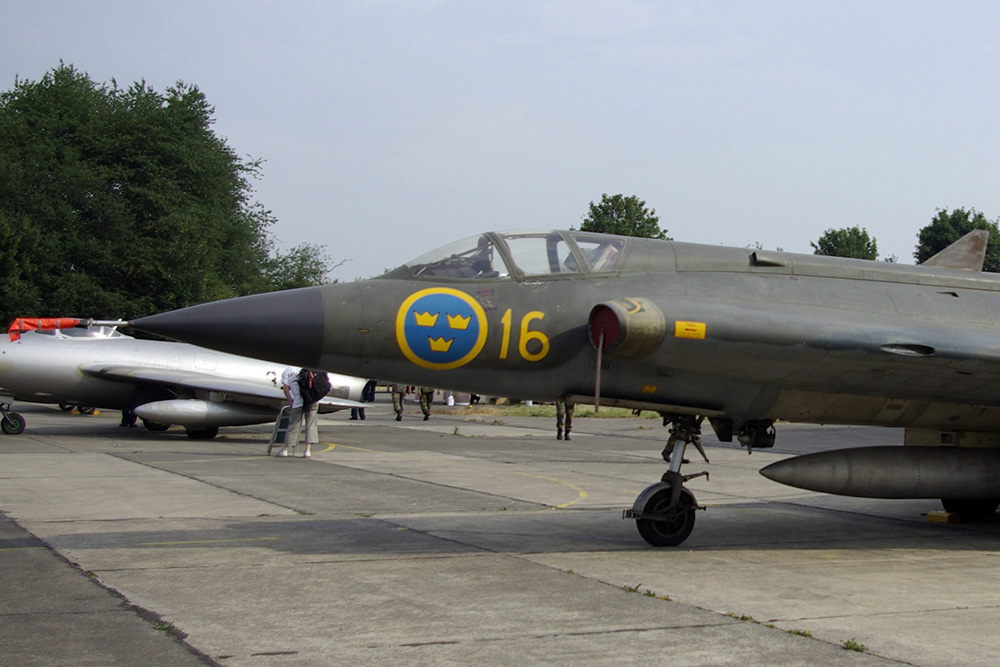
This photo is to show you the new canopy of the J35A, with a transparent rear part, and the slightly altered spinal triangular fin. Note that the air intake lines up with the second bow frame of the canopy. (photo: André Gerwing/Wikimedia, modified)
J35A (J35A2) & J35B
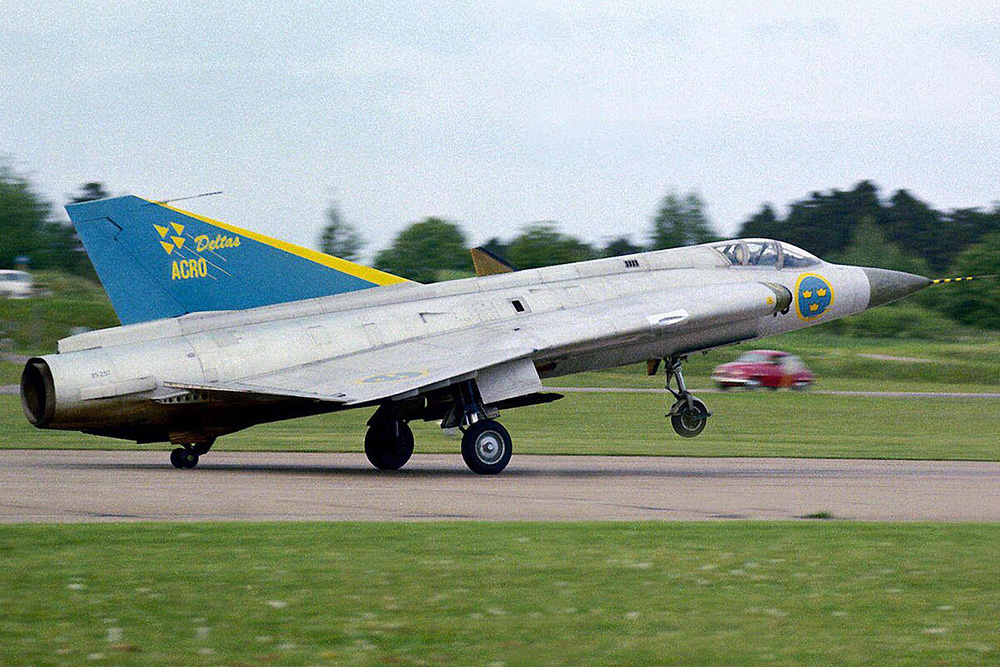
The first two-thirds of the production J35As were built as described above. Later during production the afterburner changed, and the rear of the J35A became longer with a retractable twin wheel tail gear. The end of the fuselage now extends beyond the brake chute housing. Many original J35As were upgraded to this J35A2 standard, except those converted to Sk35C trainers. Furthermore, some J35As have been equipped with an infrared sensor under the nose, in a square section fairing with a round window at the front.
The J35B is externally the same as the late model J35A, but has different weapon systems inside.
Saab 35BS
Six J35B airplanes were leased by the Finnish air force while they waited for their own aircraft. These have no all-weather avionics and equipment, and were designated Saab 35BS. Externally, they are different from the regular J35B only by the broad blade antenna on top of the fuselage, in front of the small triangular fin.
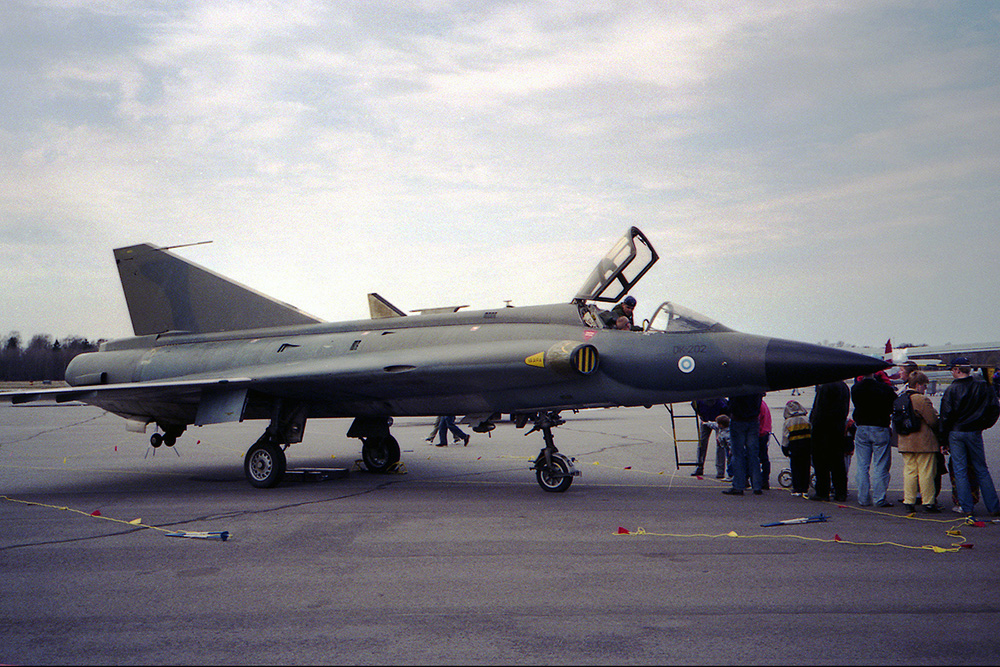
In between the canopy and the triangular fin you can see the typical long antenna that makes the Saab 35BS different from the J35B. (photo: Juhani Sipilä)
Sk35C & Saab 35CS
Having a trainer version of the high performance jet fighter was soon achieved. This Sk35C is based on the early production J35A, so with a short rear fuselage and no tail gear. The canopy is extended aft, and opens to the right - as a single piece - instead of up. There is a periscope placed on top of it, above the instructor’s panel. This version has no cannons. Finally, triangular ventral fins were added to the underside of the wings. All except one were converted J35As.
Finnish trainer Drakens were called Saab 35CS and are not different from the Swedish counterparts on the outside.
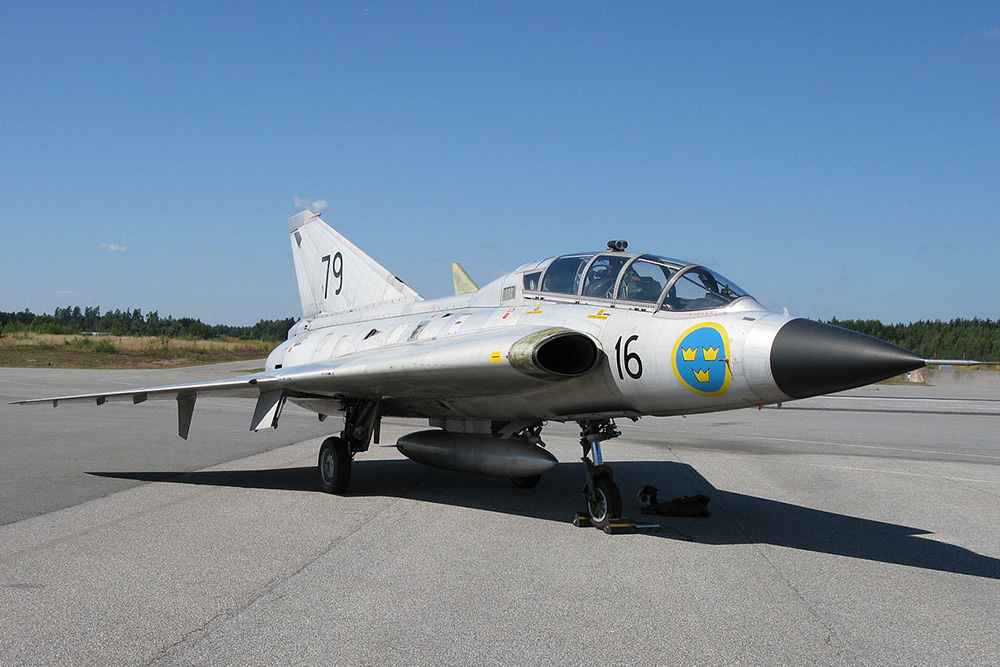
The training version, designated Sk35C in Swedish military service, is of course best recognised by the tanden canopy. Note the periscope on top! This version also has triangular fins under the outer wings. (photo: Herranderssvensson/Wikimedia, modified)
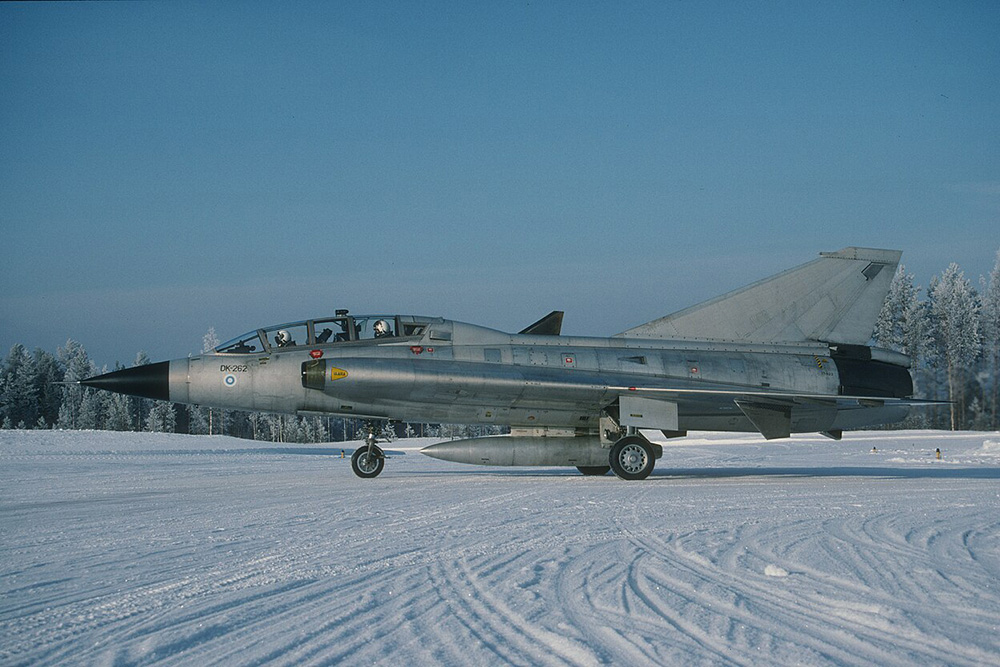
The Finnish version is called Saab 35CS and is externally not different from the Swedish version. Note that the exhaust is still the short one of the original J35A. (photo: Jyrki Laukkanen - Suomen Ilmailumuseo/Wikimedia, modified)
J35D & J35H
Two features make the J35D distinguishable from the J35B. The first is the relocation of the forward pointing needle antenna to the top of the vertical stabiliser, at the front of a small bullet fairing. Secondly, the air intakes have been slightly extended forward. They now line up with the middle of the opening part of the canopy instead of the rear of that.
A single J35D was fitted with a different radar in an attempt to secure an order from Switzerland. This was designated J35H (H from Helvetia), but it is externally not different from the J35D.
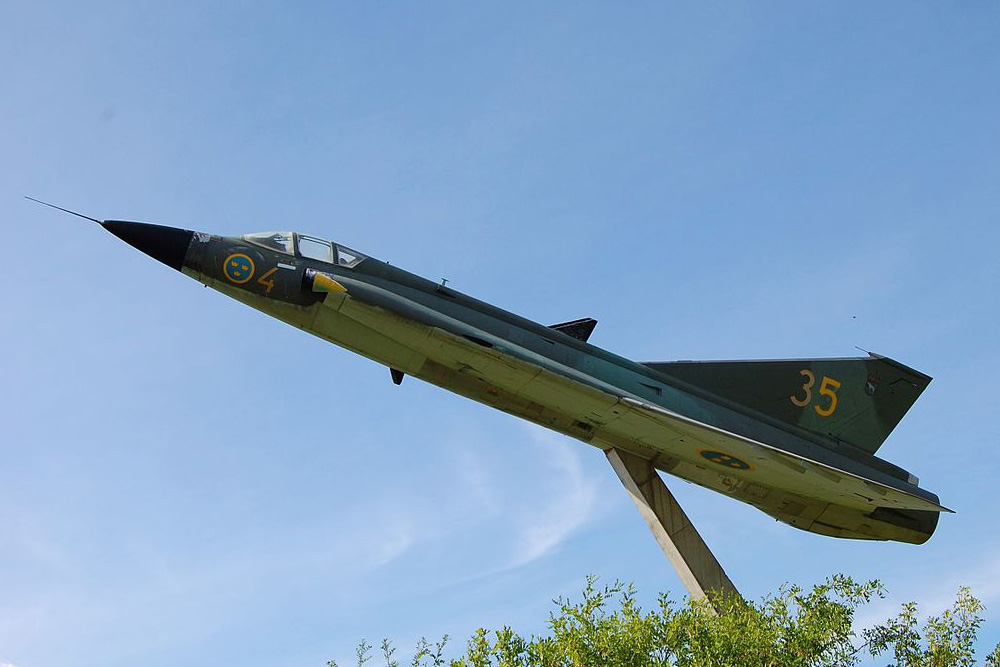
From this viewpoint the longer air intakes of the J35D can be well observed: they extend to the middle of the canopy instead of the second bow frame. Also note the small bullet fairing on top of the vertical fin, with forward pointing antenna. (photo: Indianarrow/WikiMedia, modified)
S35E
Like main contemporary fighters the Draken has a dedicated reconnaissance version, called S35E. It is essentially externally the same as the J35D, except for the nose. This has a slight fairing underneath for a forward looking camera, but there are also camera holes in the side of the nose cone. There are additional cameras in the sides of the inner wings, where on other versions the guns are located. They are down looking, through round windows at the underside of the wings. Later, S35Es were converted with the bulged canopy of the J35F (see below).
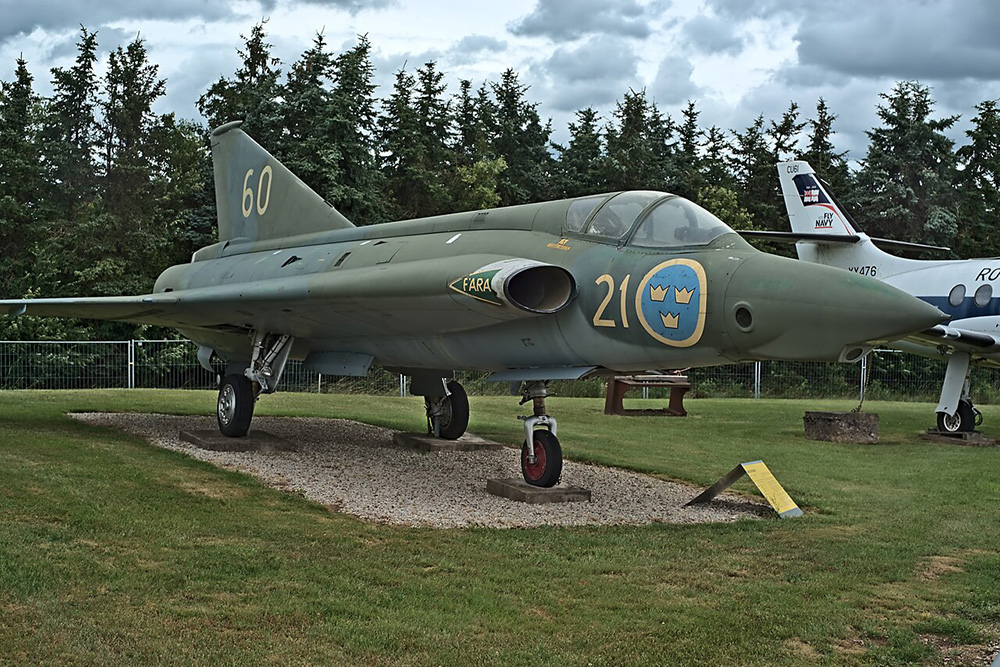
One look at the nose is sufficient to identify this Draken as an S35E, the Swedish photo reconnaissance variant. This one has the original canopy of the J35D. (photo: Thomas Vogt/Wikimedia)

Later the S35Es were equipped with the bubble canopy of the J35F, and that version is shown here. The arrow points to the camera lens in the wing root. (photo: TS Eriksson/Wikimedia, modified)
J35F (J35F1/J35F2) & Saab 35FS
The final production version was the J35F. Compared to the J35D it has a different canopy that is slightly bulged. Moreover, the centre, opening part is larger, at the expense of the rear part that has become non transparent. Another difference is that the J35F only has a cannon in the right wing extension. There are two sub versions: the J35F2 has an infrared sensor under the nose, which the J35F1 hasn’t.
The Saab 35FS is a refurbished J35F (the J35F1 to be precise) for the Finnish air force. Apart from different communication equipment they are the same as the J35F. During a later upgrade these 35FSs received the same pylons under the wing extensions as the J35J, but they still have no infrared sensor under the nose.
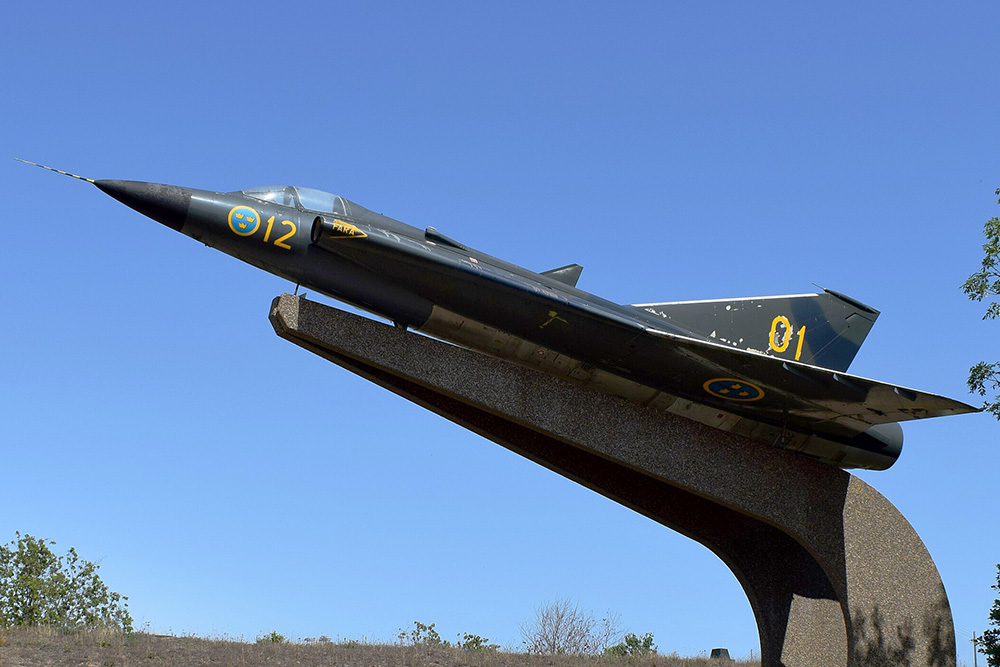
The J35F1 subtype of the J35F has the same nose as the J35D, so no infrared sensor like the J35F2 below. The J35F has no cannon on the left side. (photo: Joshua06/Wikimedia, modified)
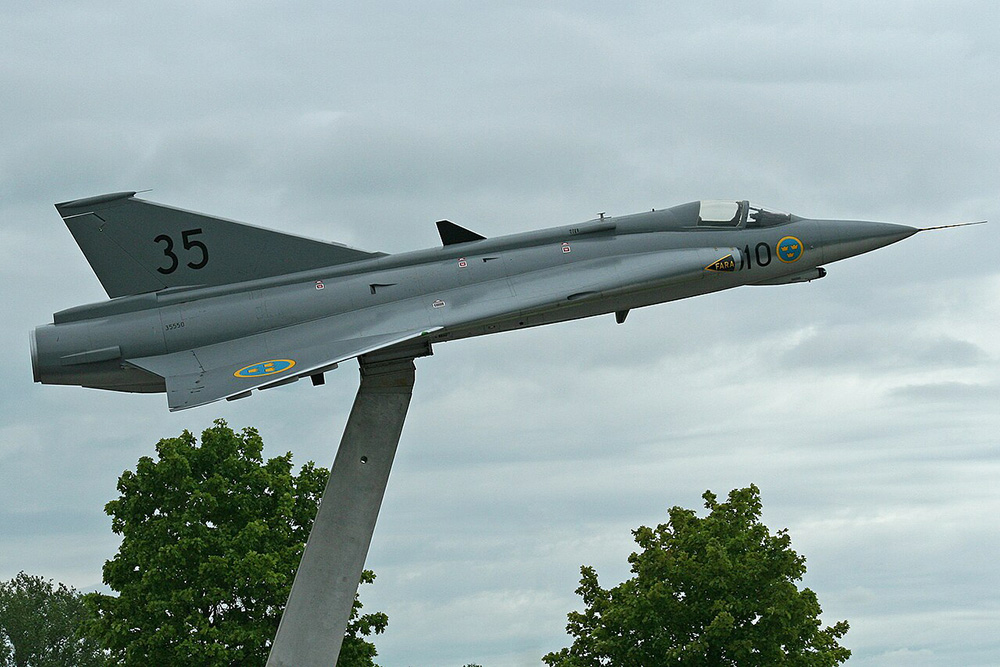
The J35F2 is the version of the J35 with an infrared sensor under the nose. It still has a cannon on the right side. (photo: Alan Wilson/Wikimedia)

Looking at the nose in more detail you can see that the J35F (and later J35J) has a canopy with a single bow frame and a larger glass roof over the pilot. The rear of the opening part is not transparent.
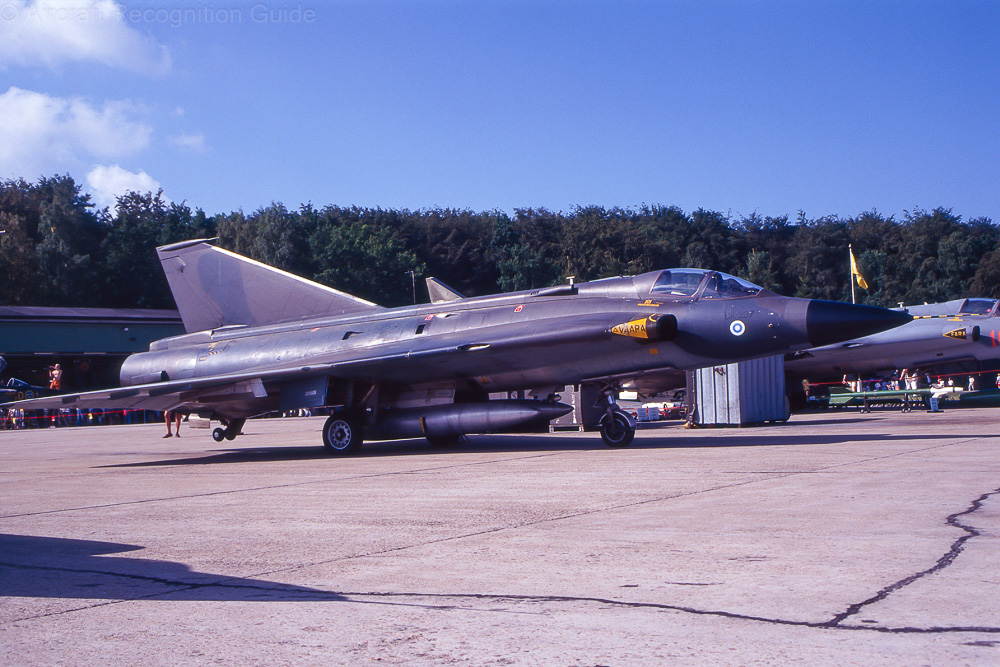
Finland received refurbished J35Fs, which they call Saab 35FS. They look externally the same as the J35F1 version, except when they have been upgraded with the pylons below the air intakes, like the J35J.
J35J
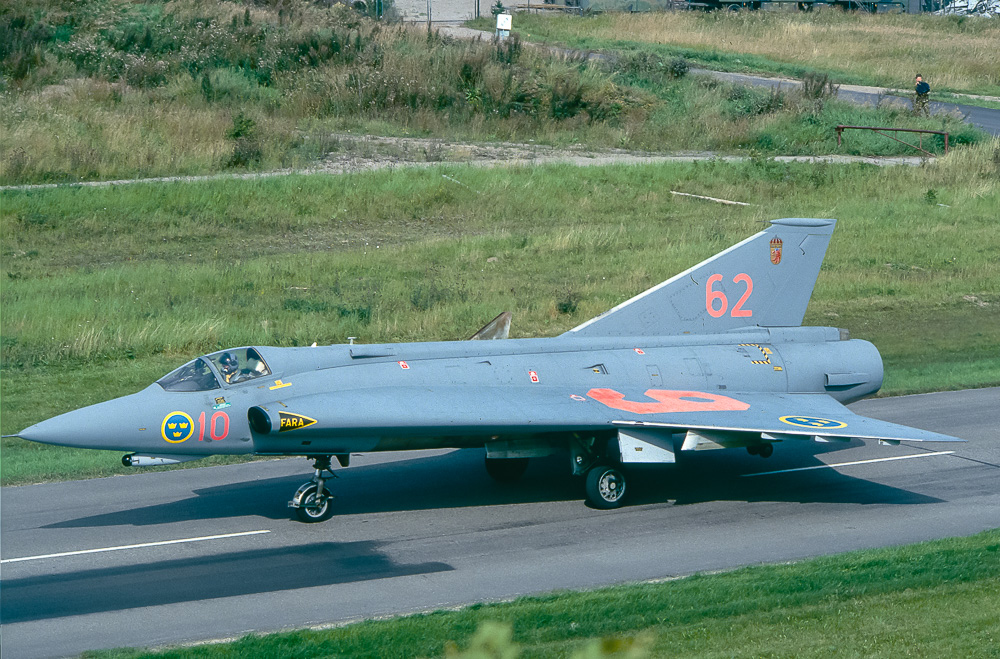
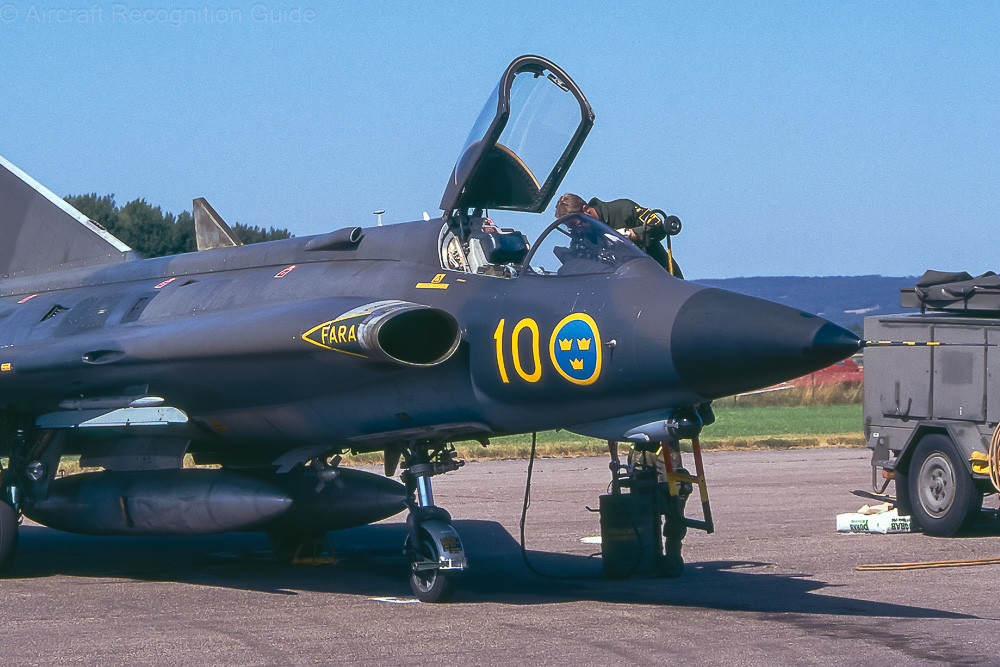
To keep the Draken relevant a little bit longer, a part of the J35Fs was upgraded to the J35J variant. These still have an infrared sensor under the nose like the J35F2. More importantly, they have a pylon under the inboard section of the double delta wings, unique for all Swedish Draken versions, but not all Drakens. To make thing more confusing, they can be removed and then the J35J looks like a J35F2.
J35Ö MkI & J35Ö MkII
The last air force to operate the Draken was Austria. They received two dozen converted J35Ds, but with the J35F style canopy. On the outside, the J35Ö (from Österreich) can be easily recognised from the J35F (J35F1), at least left from the left side, because they have a cannon in the wing root extensions on both sides (the J35F only right).
Upgraded Austrian Drakens are called J35Ö MkII. The main external difference compared to the J35Ö MkI is the addition of a radar warning receiver at the top of the vertical stabiliser, as a square extension of the bullet fairing at the rear.
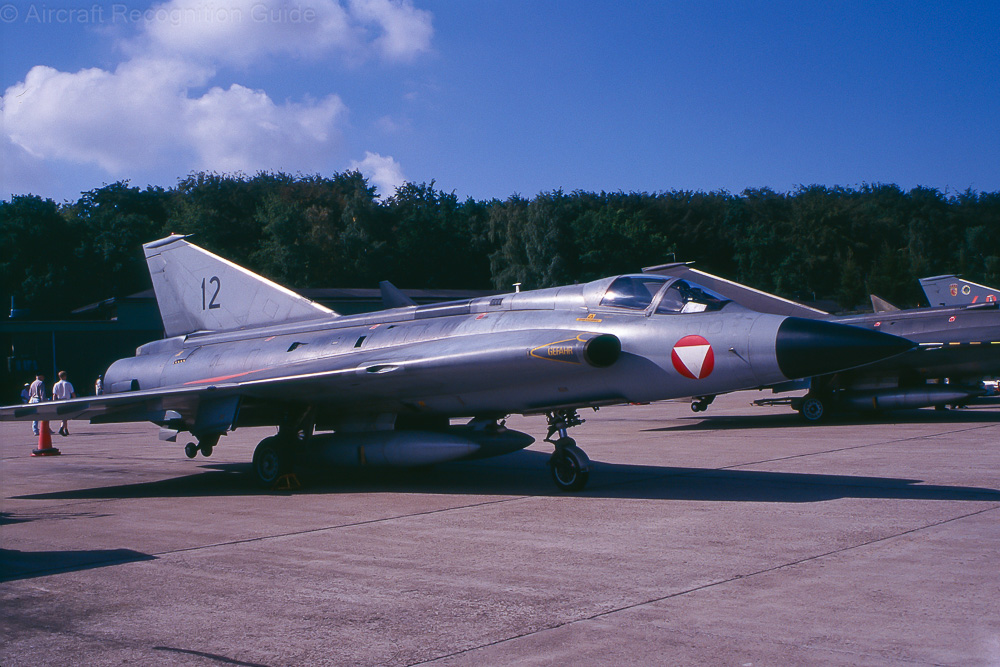
This photo shows the left side of a J35Ö MkI, so it looks just like a J35F. Only the roundel give a clue that it is an Austrian Draken.

Look at the left side of a J35Ö and you see the cannon there, the only Draken with bubble canopy to have that. Note the square extension of the bullet fairing on the vertical fin, a feature of the J35Ö MkII.
Saab A35XD (F-35)
Saab A35XD is the export version for Denmark (hence XD) of a dedicated attack variant of the J35F. The Danish called it F-35. It is mostly similar in appearance as the J35F, except than it has pylons on the inboard wings like the J35J. But it can be recognised from that J35J by the lack of auxiliary vertical fin. There is just a small blade antenna there. Also, the A35XD has a radar warning receiver antenna in a bullet fairing on top of the vertical stabiliser.
In the 1980s the F-35s were upgraded with a laser range finder under the nose, in a distinctive fairing, similar to that of the RF-35. The nose cone also became less pointed.
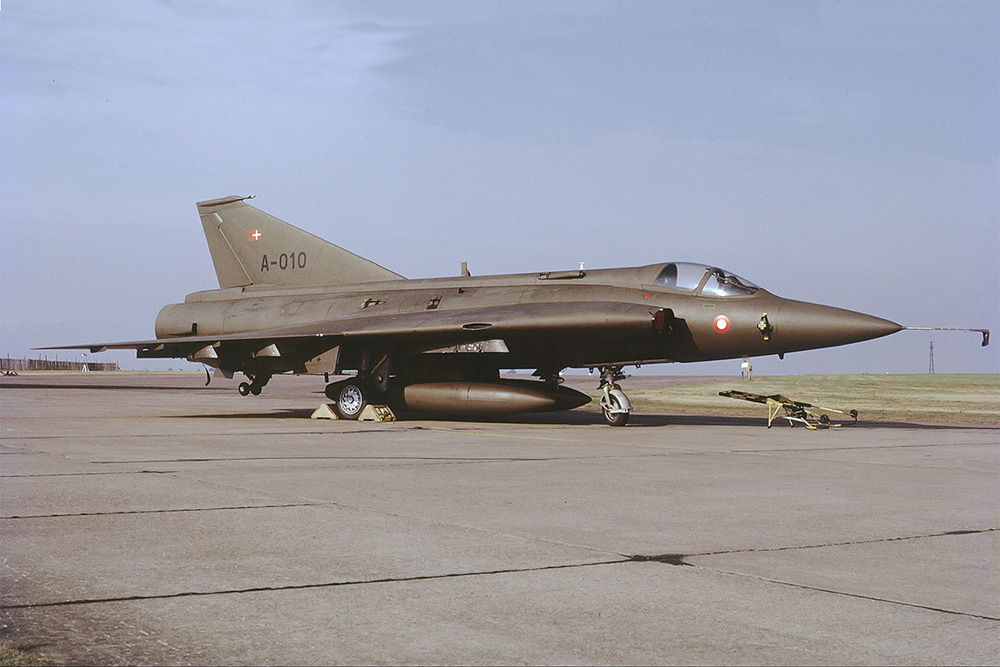
A Danish F-35 as it was originally delivered, so with the regular nose and only a small bullet fairing on top of the vertical stabiliser. (photo: Peter R. Foster, used with permission)

After the WDNS upgrade the Saab F-35s looked like this: with a square extension of the bullet fairing on the tail and a nose with the shape of the S35E, but without the side windows. (photo: Ralf Manteufel/Wikimedia)
Saab S35XD (RF-35)
The Danish version of the recce variant is called RF-35 by them, and S35XD by Saab. It is externally the same as the A35XD, except for the nose. The silhouette is the same as that of the upgraded F-35s, but with two additional round windows at the sides for sideways looking cameras. A rounded pod with infrared cameras can be attached to the left outboard wing pylon. Unlike the Swedish S35E there are no cameras in the wings and the cannons are retained.
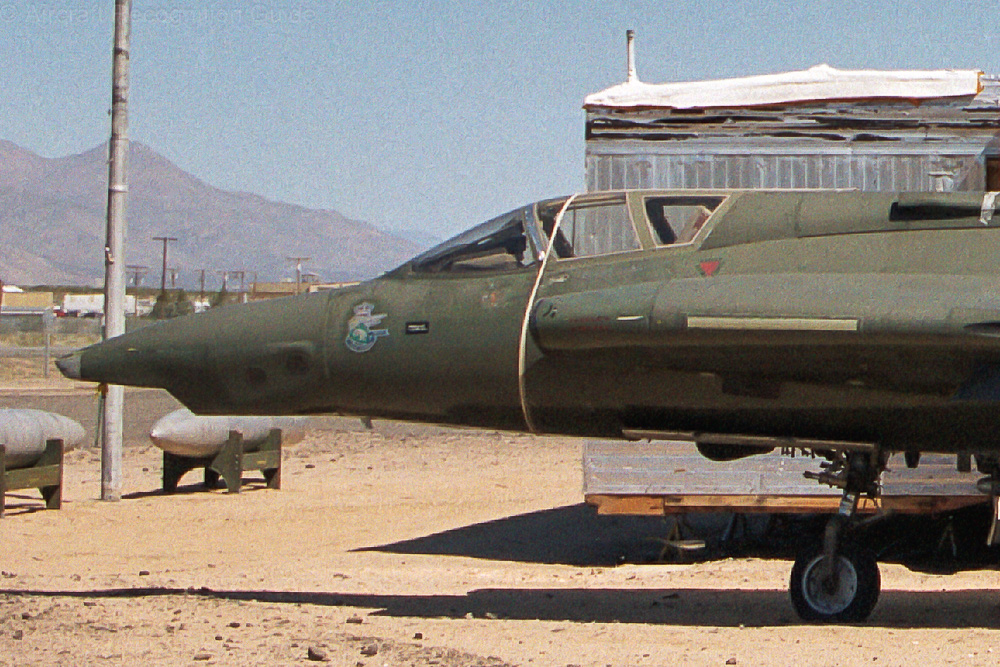
Unlike the other Danish Draken version, the RF-35 (also called Saab S35XD) had a non bulged canopy with two frames, like the Swedish S35E. They lacked the triangular fin on top of the fuselage though.

The WDNS upgrade of the reconnaissance Drakens involved the addition of an RWR antenna on top of the tail, and the slightly bulged canopy of the F-35. (photo: Mike Freer - Touchdown Aviation/Wikimedia)
Saab Sk35XD (TF-35)
Of course the Danish needed a trainer version as well and this became the Sk35XD, or TF-35 in Danish service. These have a canopy similar to that of the Sk35C. Other features are that of the F-35: no secondary vertical fin but a small blade antenna on top of the fuselage, no triangular fins under the wing tips, but a bullet fairing on top of the vertical fin and pylons under the air intakes. Moreover, they still have a cannon in the right inboard wing, longer air intakes and a tail hook.
In the 1980s they were upgraded in the same way as the F-35: with a laser range finder under the nose, in a distinctive fairing and with a less pointed nose cone.
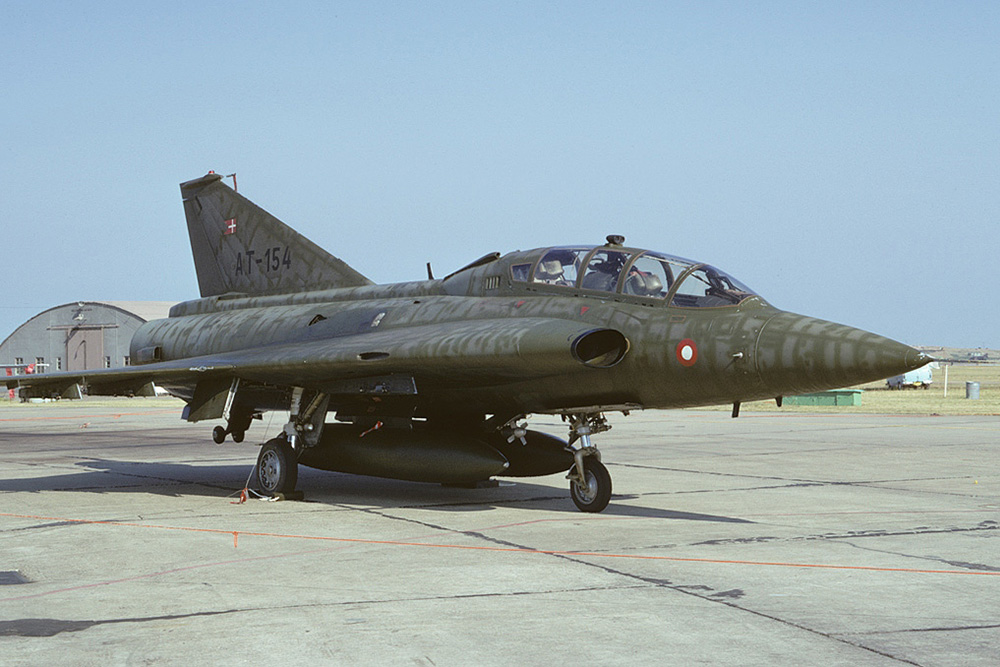
Original Danish dual seat Drakens, designated TF-35 by them, look ike the Swedish Sk35C except for the spinal triangular fin. And they have a separate intake at the back of the canopy. (photo: Mike Freer - Touchdown Aviation/Wikimedia)
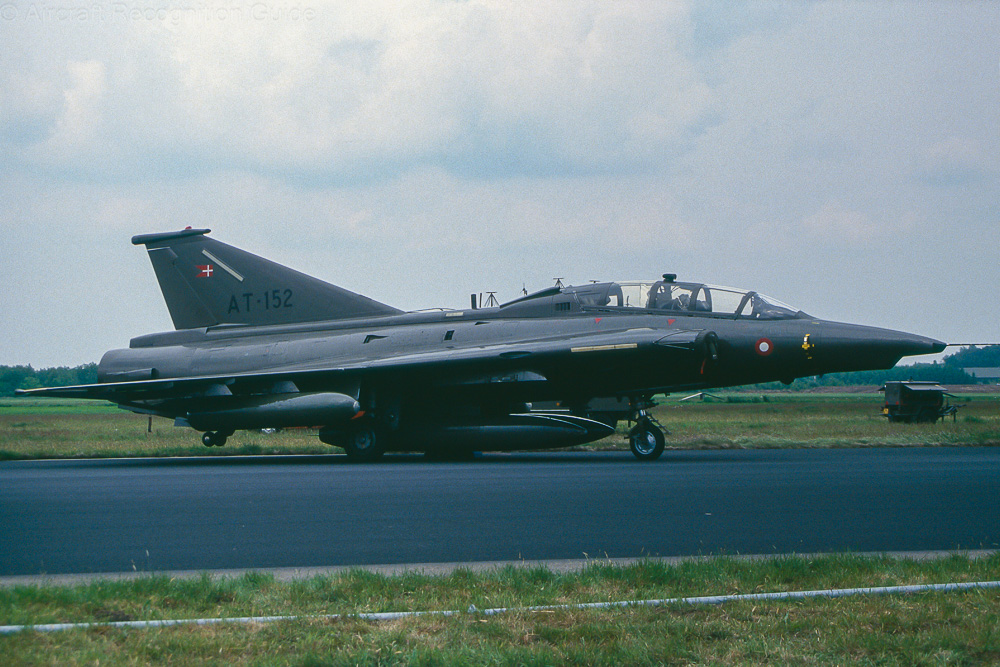
Here is the TF-35 after the upgrade, with a laser sensor under the nose and a radar warning rceiver on top of the tail.
Saab 35XS (Saab 35S)
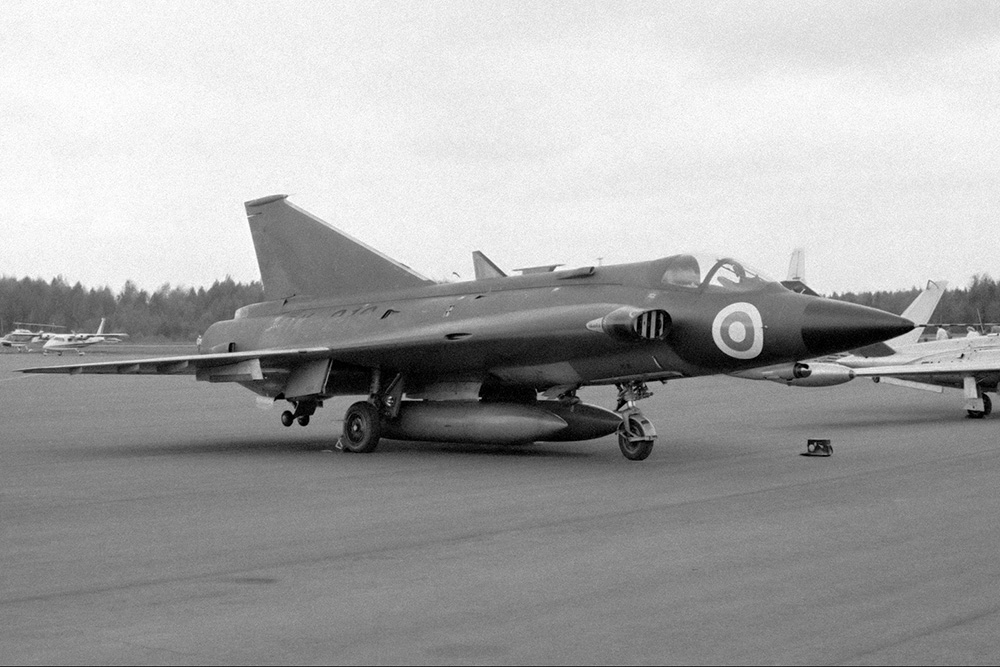
New-build Drakens for Finland carry the designation Saab 35XS, for ‘export Suomi’, but are called Saab 35S by the Finnish. Based on the J35F (J35F2) have a cannon on the right only, and an infrared sensor under the nose. Originally, they had a broad blade antenna on top of the fuselage (like the 35BS). This was how to distinguish them from the J35F. Later, this was removed and that made the Saab 35S indistinguishable from the J35F.

_2010-07-03_Andre_Gerwing_Collection_ID_015275.jpg)
_1964.jpg)

.jpg)

.jpg)


This is a Saab 35S in its original shape, with a long blade antenna in front of the triangular fin in the middle of the fuselage. (photo: Tuomo T. Mäkinen)
Similar aircraft
Some airplanes look so similar to the Saab 35 Draken that you may confuse them. Below you can read how to distinguish them.
Differences Saab Draken & Saab 210
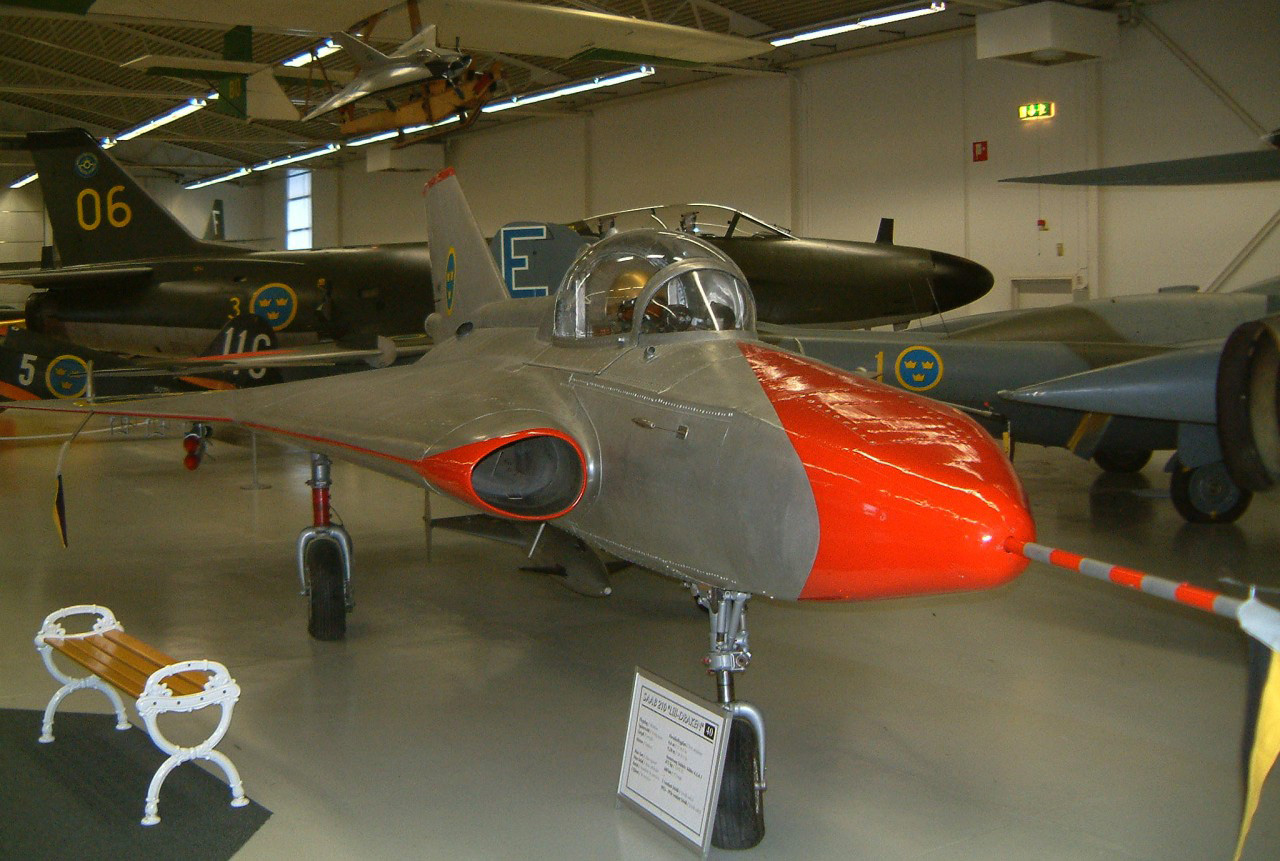
Being the research prototype for the double delta of the Draken, it is logical that these aircraft look very similar. The biggest difference is in the canopy, as the Saab 210 has a bubble canopy. And the aircraft is about 30% smaller than the Draken. The Saab 210 changed appearance during the flight test programme, at first having a short, rounded nose, then a short, flat nose and finally a much longer nose extending in front of the air intakes as shown here. (photo Paul Richter/WikiMedia)

Differences Saab Draken & Mirage 3/5
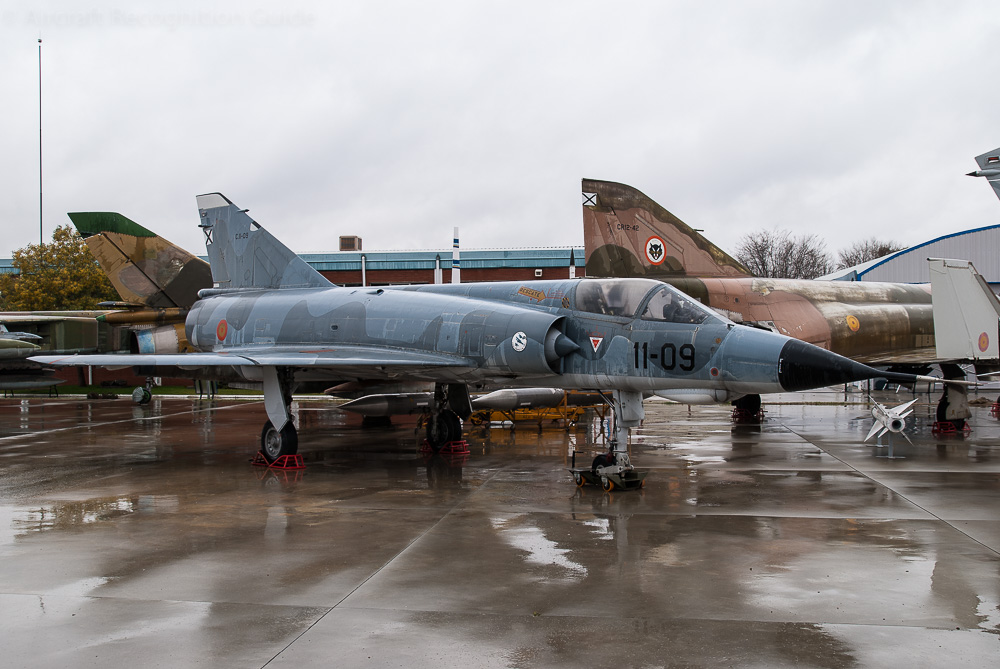
Thanks to the delta wings, canopy flush with the top of the fuselage and vertical stabiliser you might confuse the Mirage for the Draken. However, the Mirages lack the double delta, have semi circular air intakes with a shock cone in the middle and the main gear retracts inward. The same applies for derivatives like the Kfir and Cheetah (which have canards).
Differences Saab Draken & Dassault Rafale
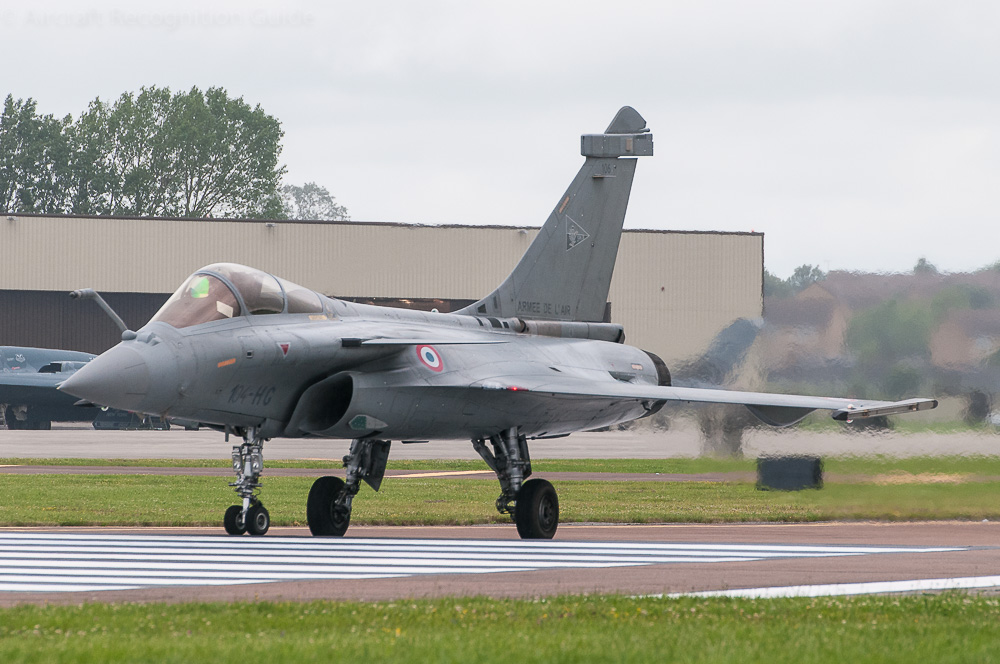
Maybe the oval air intakes may make you think that this is a Saab Draken, even though they are placed diagonally at the side the fuselage. However, the Dassault Rafale is a twin engine fighter, has canards, a bubble canopy, taller vertical stabiliser and a double wheel nose gear.
Differences Saab Draken & F-106 Delta Dart
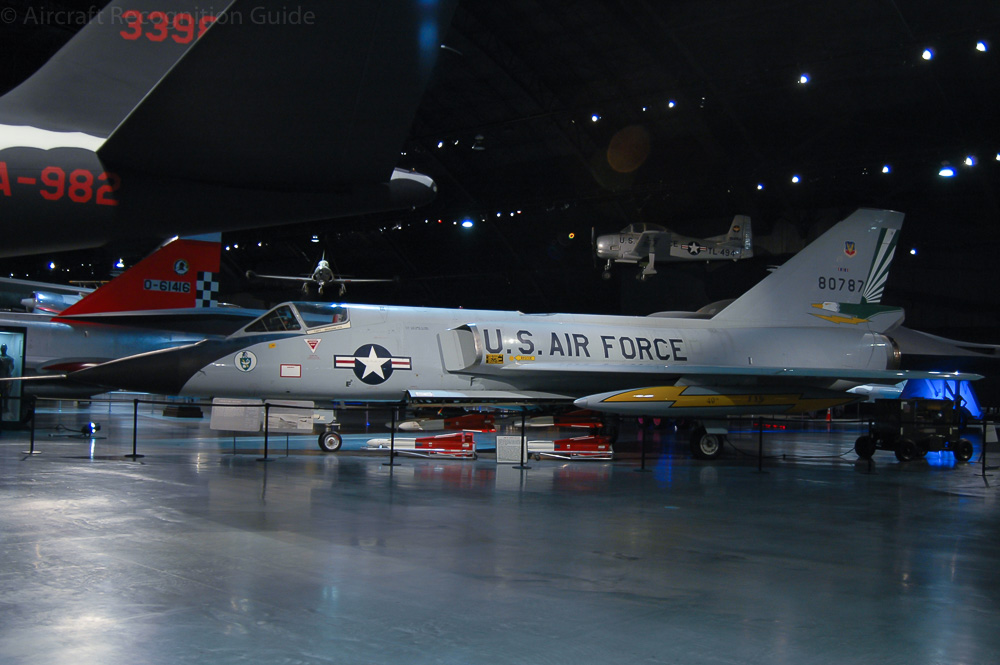
The basic shape of the Saab Draken and Convair Delta Dart is the same, but like the aircraft above the F-106 lacks the double delta. Also the air intakes are nearly rectangular.