

Sikorsky S-76
Only in the 1970s helicopter manufacturers started to see a role of the helicopter as a luxury private transport, for example from the airport to a downtown heliport. Speed was important, so these helicopters needed a streamlined fuselage and a retractable gear. Agusta and Sikorsky were the first to develop such a helicopter.
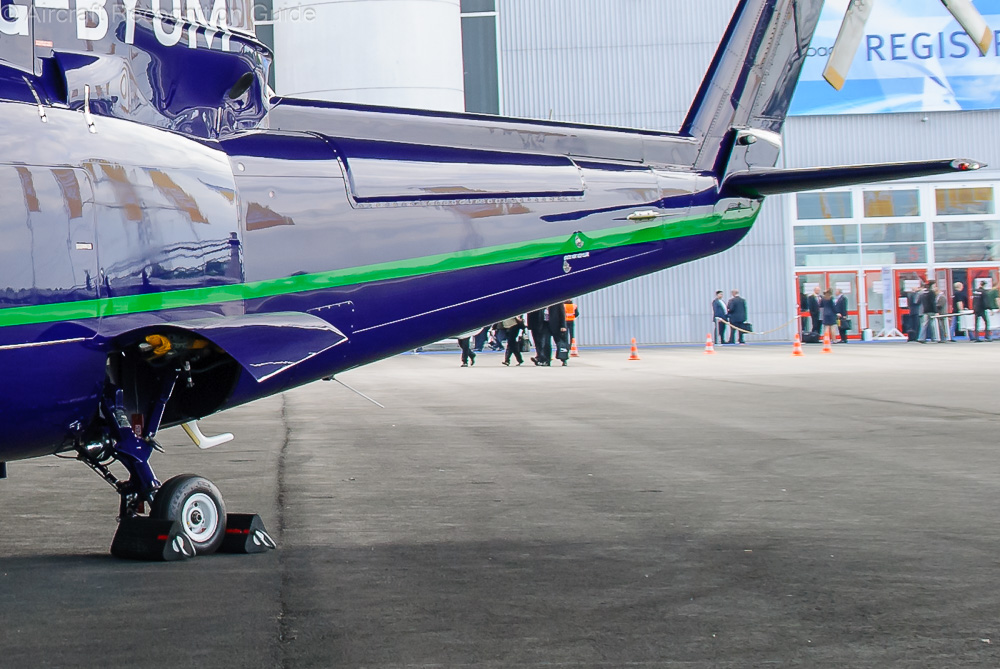
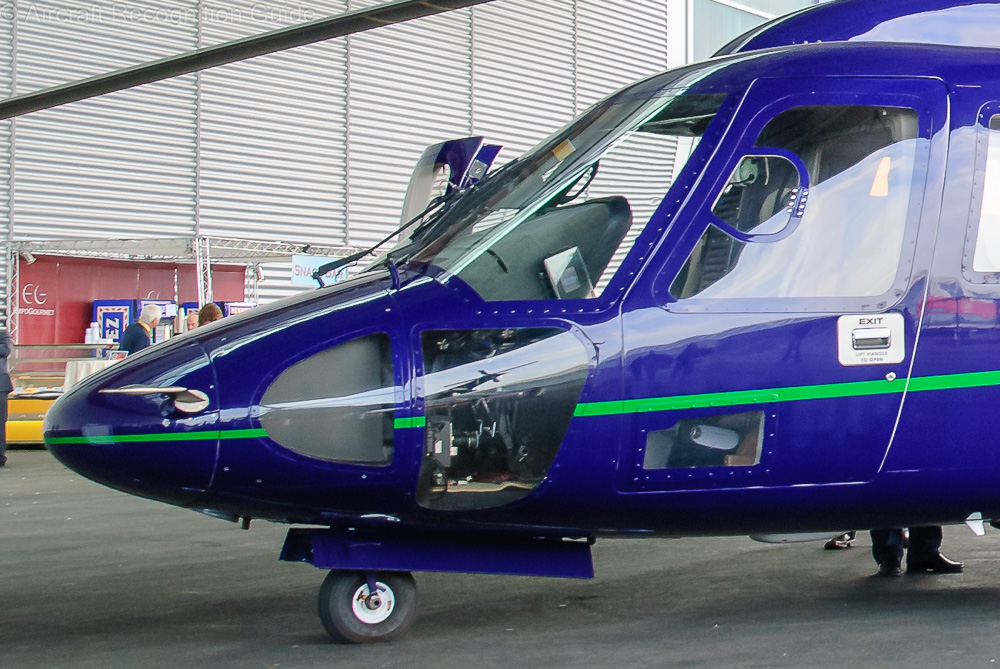
The Sikorsky contribution was the S-76, originally named Spirit, but that name was later dropped. As explained above it has a streamlined fuselage, that gradually transitions into the tail boom. Only the width of the fuselage becomes narrower more quickly. At the rear of the fuselage is a single wheel main gear, that retracts rearward in the fuselage. The The heli has a four blade main rotor and a four blade tail rotor on the top left side of the vertical stabiliser. There are low mounted horizontal stabilisers on both sides of the end of the tail boom. The S-76 has two turboshaft engines on top of the fuselage, of which the shape depends on the (engine) model. Finally, there is a single nose wheel that retracts rearward in the fuselage, behind long narrow nose gear doors.
How to recognise the different versions of the S-76
To distinguish the different versions of the S-76 you'll have to look at
- the shape of the engine nacelles, air intakes and exhausts
- the shape of the vertical stabiliser
- the shape of the tail cone
- the shape of the main rotor blades
- the shape of the tail rotor blades and rotor hub
- the type of cabin doors
- whether it has an open or shrouded tail rotor
- the shape of the nose
S-76A
Allison 250 turboshaft engines power the first version of the S-76. These have rectangular air intakes about halfway the gear box hub, and rectangular exhausts at the end of this hub, next to each other and quite close to the intakes. The tail cone slightly extends beyond the vertical fin. Finally, the main rotor blades have swept leading edges at the tips.
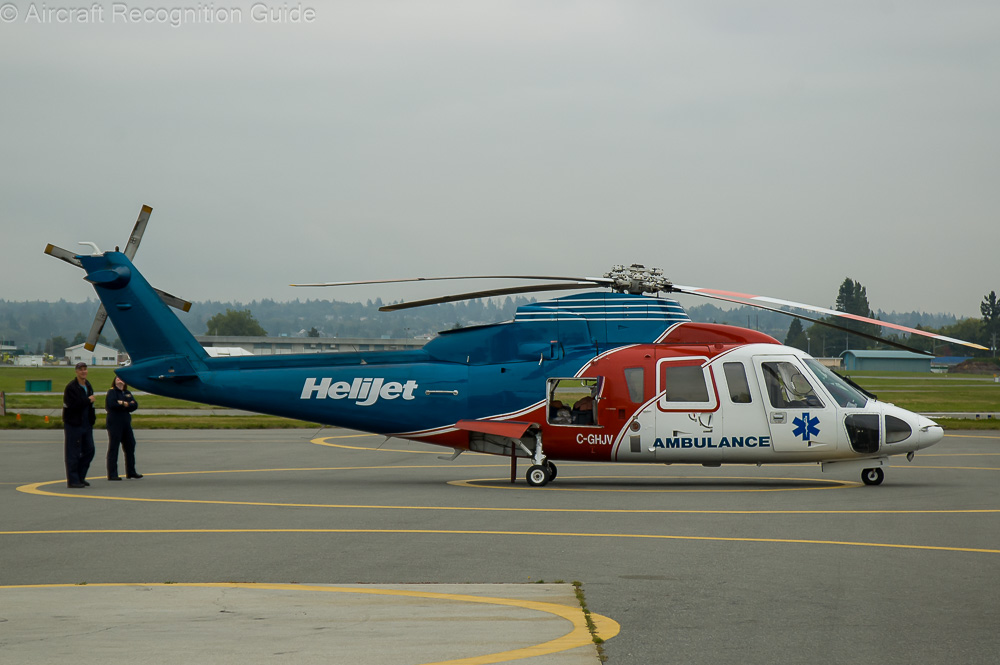
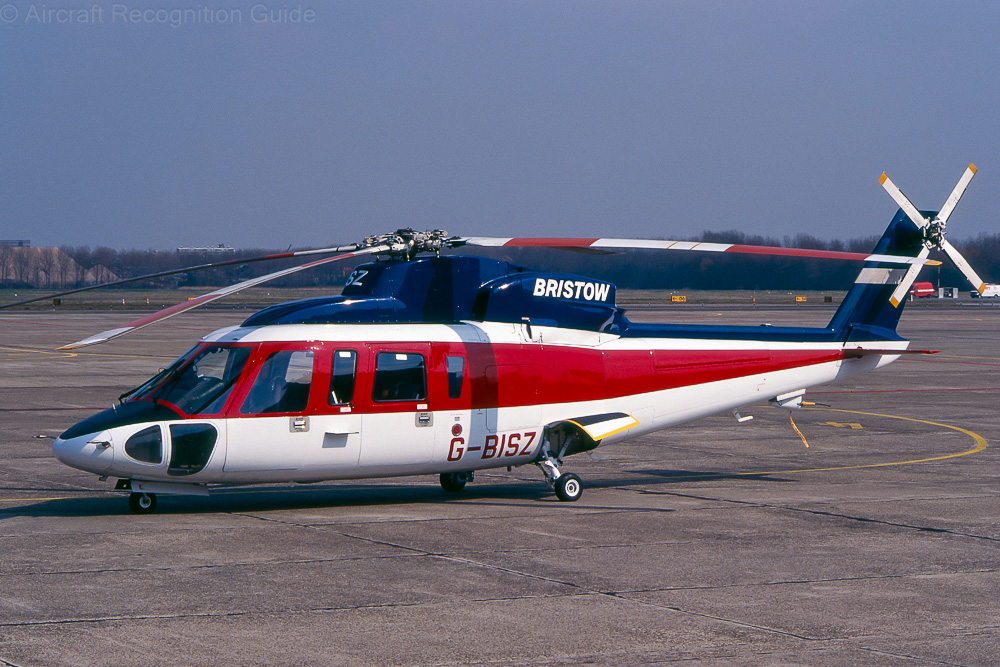
This photo is to show the general appearance of the S-76A, although it is likely an S-76A Mark II, given that most S-76A have been upgrades as such and the time the photo was made.
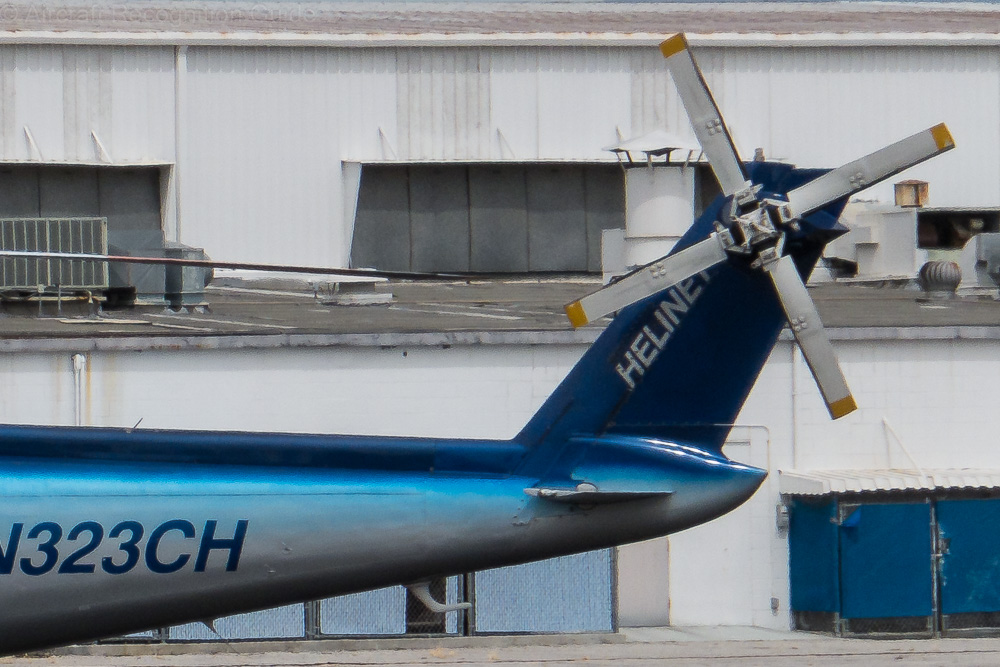
On the S-76A the tail cone extends beyond the vertical stabiliser, and the vertical fin is rather broad. This makes it each to distinguish the A model. Also noted the shape of the tail rotor hub.

There is only a short distance between the air intakes of the S-76A and the rectangular exhausts. You can also view the shaped of the main rotor blade tips and the main rotor hub here, for comparison to other versions.
S-76A+ & S-76A++
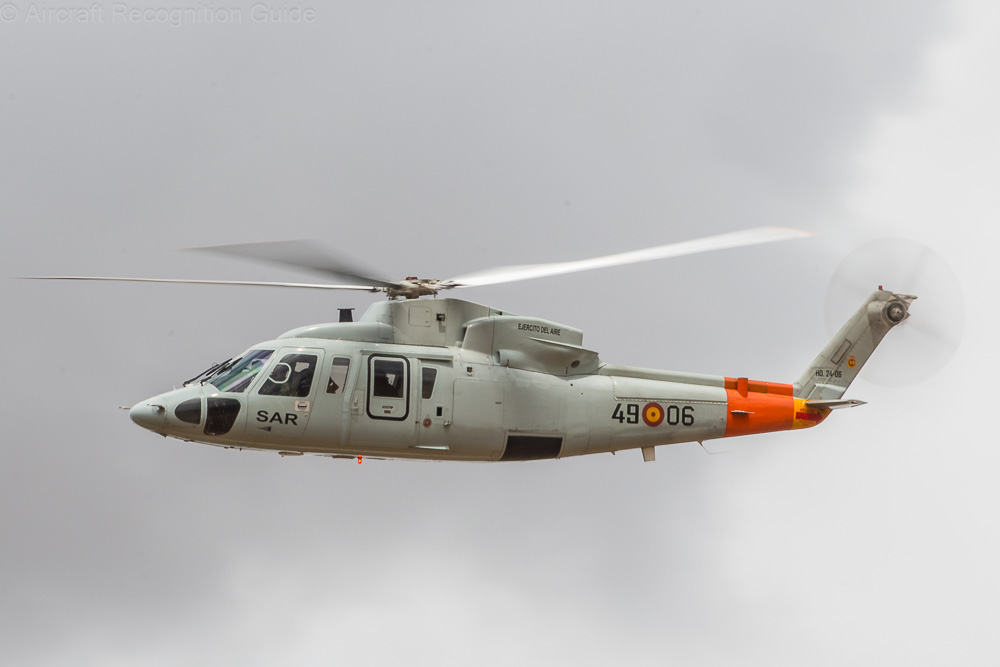
When equipped with Turbomeca Arriel engines (like those of the S-76C), the designation is S-76A+ or S-76A++, depending on the exact engine variant. The air intakes are similar to those of the standard S-76A, but the exhausts are further aft and have a square shape. There is some space between them. The tail shape remains unchanged though.
Look for the longer nacelles (and exhaust shape) coupled to the original tail and tail boom to recognise the S-76A+ and S-76A++ variants.
S-76A Mark II & S-76A Utility
Existing S-76As could be upgraded to the Mark II, which is fitted with more powerful engines, more access panels for maintenance and other detail improvements. The details still elude us though.
While the standard S-76A Mark II has hinged doors, the Utility version has sliding doors. This makes it more suited for some tasks other than transporting people. As far as we know, the only examples delivered were as AUH-76, described below.

S-76A SHADOW
One S-76A was converted with a separate, single seat canopy on the nose, to test single pilot workload. SHADOW stands for Sikorsky Helicopter Advance Demonstrator of Operators Workload. For the rest, this conversion is the same as the standard S‑76A.
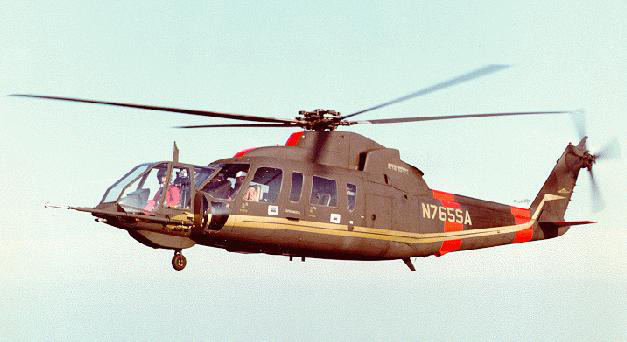
One experimental version of the S-76A is this one with an additional canopy, for the SHADOW programme. (photo: US Army/Wikimedia)
S-76B
The second main version has Pratt & Whitney PT6B turboshafts. These are in nacelles with narrow, flat intakes and exhausts, more mounted on the side of the gear box hub than integrated in them. Starting with the B model the vertical stabiliser became taller and narrower. The tail rotor hub also changed: there is no distinctive ‘square’ at the heart anymore. Additionally, the tail cone was shortened. This means that the horizontal stabilisers slightly extend past the tail cone.
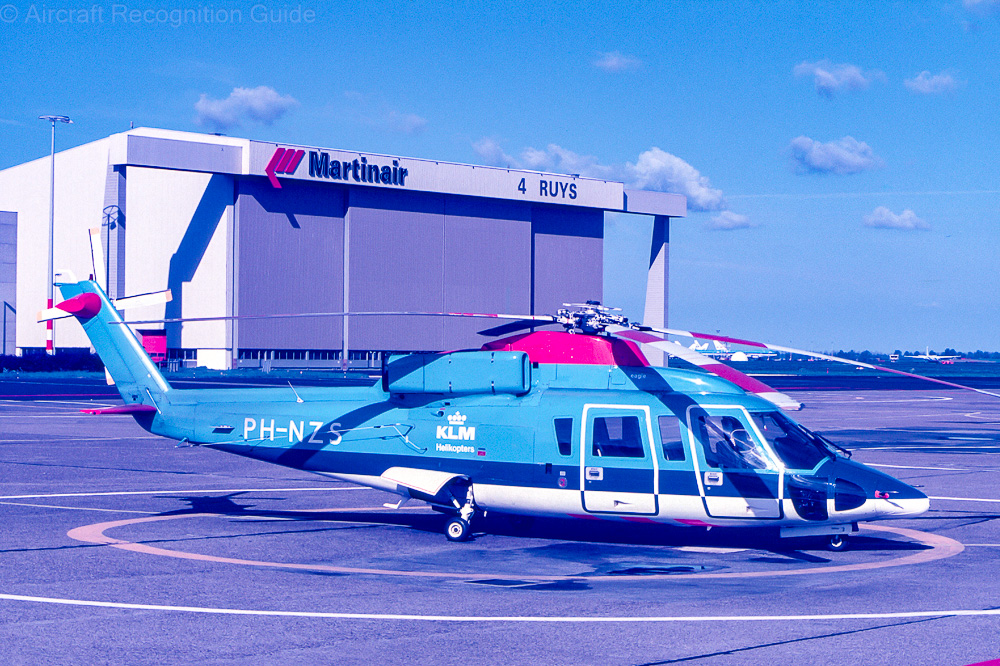
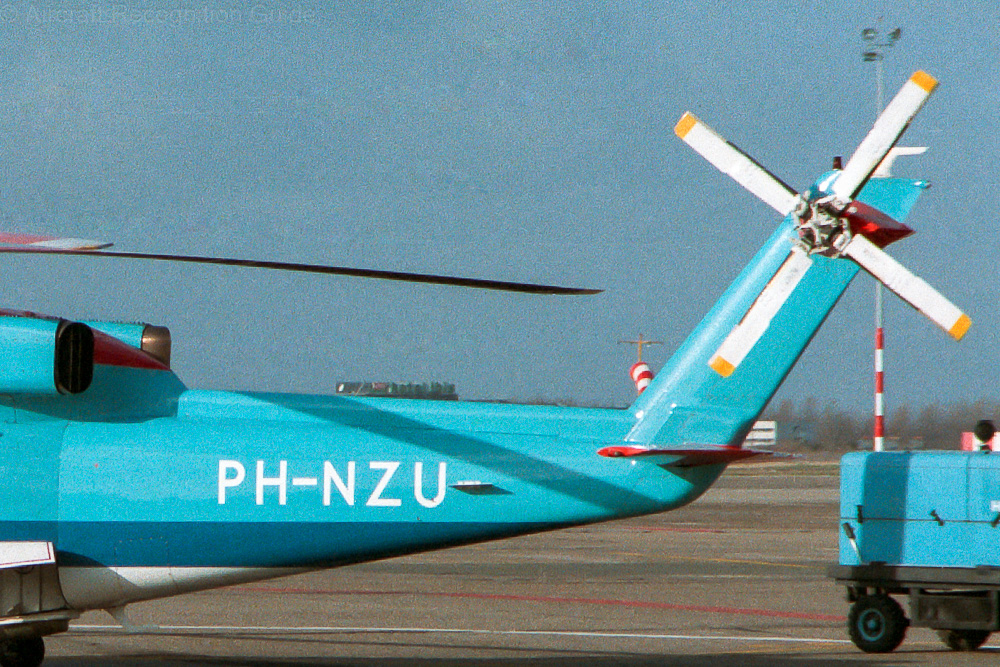

Unlike other S-76 version the S-76B has more or less separate nacelles with long, narrow intakes and exhausts.
S-76B Fantail
One S-76B was converted with a shrouded tail rotor, as a demonstrator for the RAH-66 Comanche. The original low mounted horizontal stabilisers moved to close to the top of the vertical fin. There is no separate designation for this conversion though.
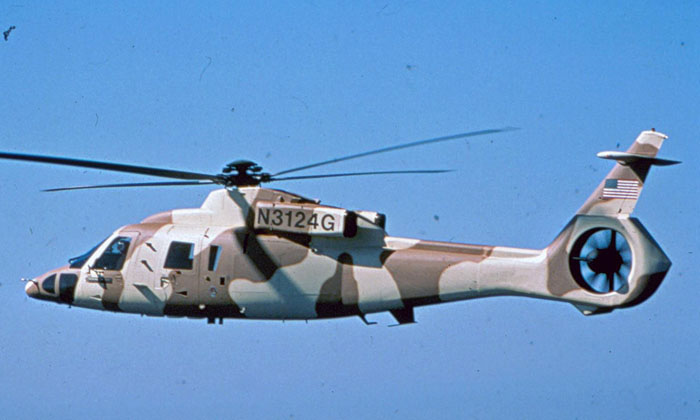
With the shrouded tail rotor meant for the RAH-66 Comanche the S-76B looks quite similar to the Dauphin, except for the near T-tail. (photo: Vinny Devine/WikiMedia)
S-76C, S-76C+ & S-76C++
The third engine option is the Turbomeca Arriel engine, the subtype determining the number of plusses in the type designation. The engine nacelles, intakes and exhausts are like those of the S-76A+/++. For the rest, the S-76C is equal to the S-76B, including the taller, narrower tail, to that is how to distinguish the C from the A+.
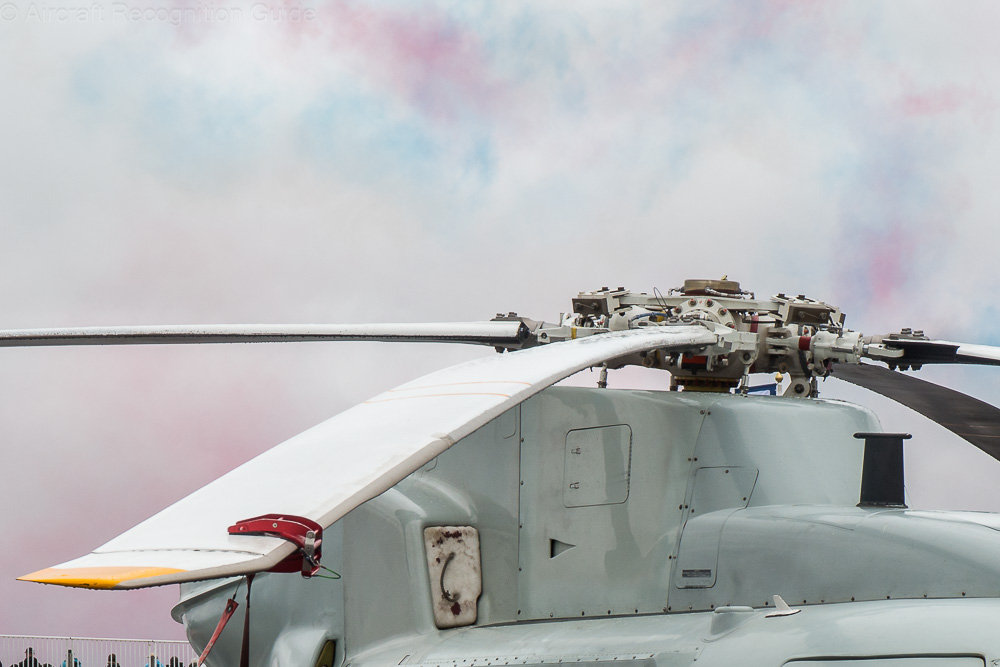

This detail photo shows the typical exhausts of the Turbomeca engines of the S‑76C (and S‑76A+). (photo: David Álvarez López/Wikimedia, modified)
S-76D
Finally, the D model has PW210 engines. These are placed in long nacelles with a double intake, or at least a bar through the canted square opening. The exhaust pipe is visible and pointing outward. The S-76D has a quieter tail rotor compared to the other variants, thanks to the diagonally cut off blade tips. The main rotor has wider chord, composite blades with fully swept tips, leading edge and trailing edge.
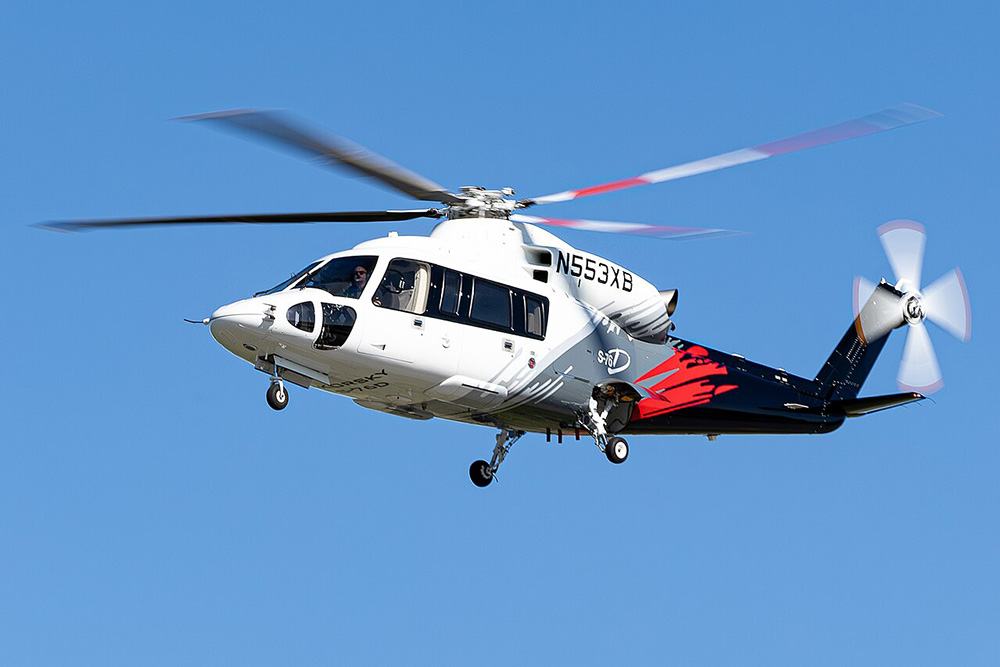
The final S-76 version was the S-76D. Again this has different engines than the previous variants, resulting in a different nacelle shape. Not well visible are the fully swept main rotor tips and cut off tail rotor blade tips. (photo: Coldstreamer20/Wikimedia)

Zooming in you can better see the split air intake of the S-76D's Pratt & Whitney turboshafts, and the visible exhaust pipes, pointing outward. (photo: Alec Wilson/Wikimedia, modified)
AUH-76 Dragon Lady
When the S-76A MkII is armed with miniguns and/or rocket pods on stub wings at the bottom of the second cabin door, this is marketed as the AUH-76. This military version also has an optical sensor on top of the rotor mast.
H-76 Eagle
One S-76B was converted to H-76, its military version. Like the AUH-76 it has a rotor mounted sight and small stub wings. Additionally, the H-76 Eagle has a slightly longer nose.
S-75
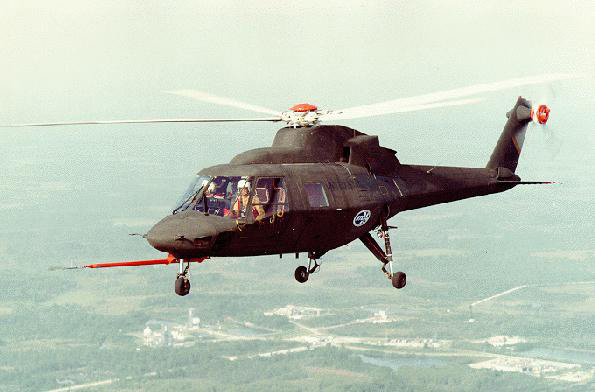
Sikorsky used many components of the S‑76A when it developed the S-75 proof-of-concept helicopter for the US Army Advanced Composite Airframe Program (ACAP). The top of the fuselage with gear box hub, engines, main rotor and tail are essentially the same. These are mated to a new fuselage this still looks similar to that of the S-76. The sides are bent though, giving the S-75 a distinctive body line. Finally, the S-75 has a fixed wheeled gear.

.jpg)

.jpg)
The Sikorsky S-75 looks very similar to the S‑76, because many components were re-used. In particular new are the fuselage with a bent side and the fixed gear. (photo: US Army/WikiMedia)
Similar helicopters
Some helicopters look so similar to the S-76 that you may confuse them. Below you can read how to distinguish them.
Differences S-76 & AW109 (A109)

Being used for a similar role, the Leonardo AW109 (originally Agusta A109) looks similar to the S-76 as well. The tail boom is narrower though and has a pointed end. Moreover, the tail rotor is attached to the tail boom instead of the vertical fin. The main gear is retracted in small stubs or up in the side of the fuselage.
Differences S-76 & Bell 222/230/430
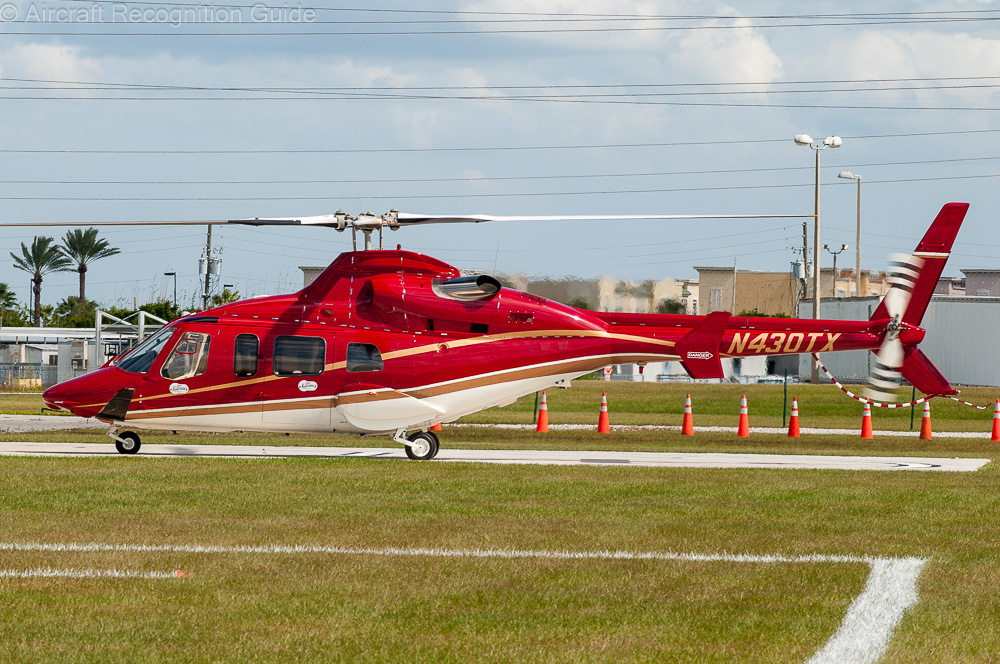
Bell was later on the market with an executive helicopter, but it still looks alike. The tail boom is even more narrow than on the A109 and the gear retracts in sponsons (unless it has skids). The tail rotor is placed low. The main rotor has two or four blades.
Differences S-76 & AW139/AW169
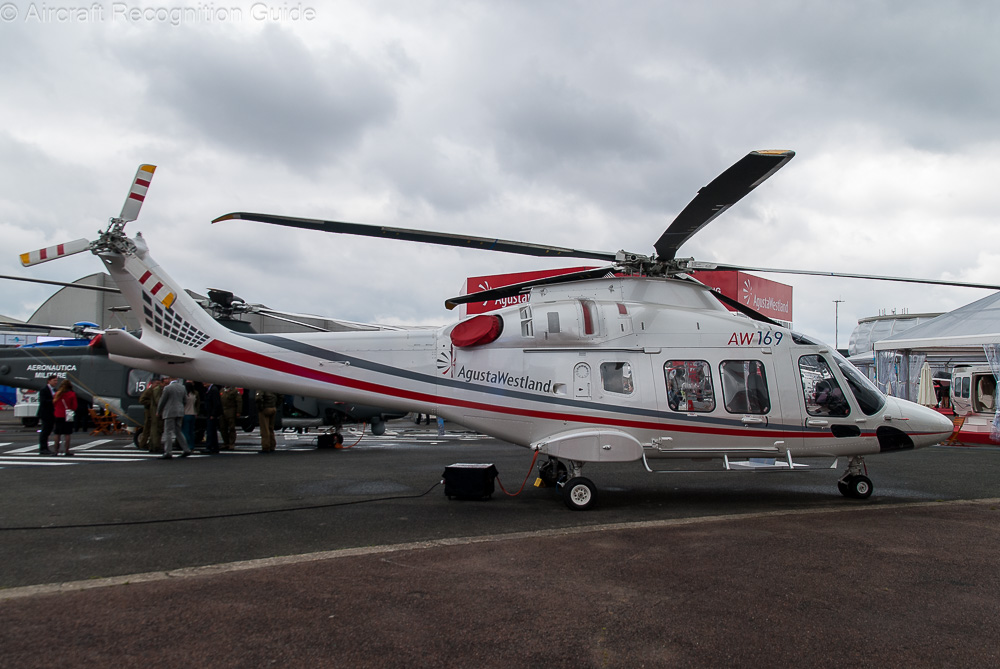
Although shorter than the S-76, the AW139 and AW169 have a wide tail boom as well. The Leonardo helicopters have a high placed tail rotor on the right though and horizontal stabilises with bent-up tips. Like the Bell helicopter above the main gear of the AW139/AW169 retracts in sponsons. Finally, it has twin wheel nose gear.